Within Better Habits
Tracking Is Better When It Changes Your Next Move
Tracking becomes more useful when the information leads to timely feedback about what to keep, change, or investigate.

On this page
- What feedback adds to monitoring
- What physical activity reviews found
- Why no single feedback format wins
Page outline Jump by section
Introduction
Self-monitoring becomes more useful when it changes what you do next. A step count, study log, spending record or food diary can reveal what happened, but feedback turns that record into a decision: continue, adjust the target, change the environment, or investigate why progress stalled. Research on behaviour change broadly supports this pairing. A large meta-analysis found that interventions designed to increase progress monitoring improved goal attainment, with stronger effects when progress was physically recorded or reported to someone else.[PubMed]pubmed.ncbi.nlm.nih.govDoes monitoring goal progress promote goal attainment? A meta-analysis of the experimental evidence - PubMedFebruary 1, 2016…
The more specific evidence on feedback is encouraging but less tidy. A corrected 2024 systematic review of self-monitoring interventions found a small positive effect of adding feedback on physical activity, while comparisons between different feedback styles produced mixed results.[Springer]link.springer.comCorrection: Impact of feedback generation and presentation on self-monitoring behaviors, dietary intake, physical activity, and w… The practical lesson is not that one perfect dashboard, message style or coaching format exists. It is that tracking works better when the information is translated into a timely, understandable signal about the next useful move.
What Feedback Adds to Monitoring
Monitoring answers “What did I do?” Feedback adds at least one further comparison: “How does that relate to what I intended to do?” That distinction matters because raw data can accumulate without guiding behaviour. Ten thousand recorded numbers are not necessarily ten thousand useful observations.
The clearest feedback usually connects three pieces of information:
- Current behaviour: what actually happened, such as 5,800 steps or three planned practice sessions completed.
- A reference point: a goal, previous performance or relevant pattern against which the result can be interpreted.
- A possible response: what to maintain, alter or investigate next.
That structure is consistent with self-regulation theories in which people compare their present state with a desired state and then adjust their behaviour. The broader evidence suggests that self-monitoring, goal setting and personalised feedback can all contribute to behaviour change, but their effectiveness varies across behaviours and populations rather than operating as universally successful ingredients. A meta-review of 66 meta-analyses found that several such techniques were associated with better outcomes in some circumstances, while none worked consistently across every setting.[PubMed]pubmed.ncbi.nlm.nih.govSelf-regulation mechanisms in health behavior change: a systematic meta-review of meta-analyses, 2006-2017 - PubMed…
This explains why a tracker can be highly informative without being especially useful. Imagine that someone records daily walking and repeatedly finishes at about 6,000 steps against an 8,000-step goal. The number alone says they missed the target. Useful feedback asks a more actionable question: Where is the shortfall occurring? If most of it comes from low activity after work, the next experiment might be a 15-minute walk immediately after arriving home. If weekends are responsible, the intervention should be different. Feedback earns its place when it narrows the distance between observation and adjustment.
Timing can matter for the same reason. A monthly summary may reveal a pattern after it has become entrenched; feedback available while there is still an opportunity to act can support a different decision. A systematic review of 31 just-in-time diet and physical-activity interventions found that most feedback was personalised and goal-oriented, but only a small minority explicitly supplied an actionable recommendation. Among the nine studies that directly tested behaviour-change effects, four found significant improvements; successful studies commonly included feedback that was continuously available, goal-oriented or actionable. The reviewers regarded these characteristics as promising rather than definitively proven because study designs varied too much to isolate the best combination.[PubMed Central (PMC)]pmc.ncbi.nlm.nih.govOpen source on nih.gov.
What Physical-Activity Reviews Found
Physical activity provides unusually useful evidence because wearable devices can both measure behaviour and feed the result back rapidly.
A 2022 BMJ systematic review examined 121 randomised controlled trials involving 16,743 participants. Interventions in which adults received feedback from physical-activity monitors produced more activity than control conditions without monitor feedback. Across the studies, the estimated effect on overall physical activity was equivalent to roughly 1,235 additional steps per day, while moderate-to-vigorous activity increased by about 48.5 minutes per week. The authors rated the certainty of evidence as low for overall physical activity and moderate for moderate-to-vigorous activity, and cautioned that publication and small-study bias might inflate the estimate.[BMJ]bmj.combmj 2021 068047Effectiveness of physical activity monitors in adults: systematic review and meta-analysis | The BMJJanuary 26, 2022…
Earlier evidence in healthcare populations points in the same direction. A 2019 meta-analysis of randomised trials involving people receiving healthcare found a moderate positive effect from interventions that used objectively measured activity feedback from wearables. Again, however, the interventions varied considerably, preventing a confident conclusion about which accompanying feedback strategy was responsible for the improvement.[PubMed]pubmed.ncbi.nlm.nih.govOpen source on nih.gov.
The most direct evidence for feedback on top of self-monitoring comes from a 2024 systematic review by Rebecca Krukowski and colleagues. It deliberately included trials in which both groups self-monitored, but only one received feedback, or in which researchers compared different kinds of feedback. Across 19 studies and 3,261 participants, the evidence was heterogeneous. For physical activity, the corrected meta-analysis found a statistically significant but modest benefit from adding feedback: Cohen’s d = 0.29, 95% confidence interval 0.16 to 0.43.[Springer]link.springer.comCorrection: Impact of feedback generation and presentation on self-monitoring behaviors, dietary intake, physical activity, and w…
That corrected number is worth noting because the article was initially published with a substantially larger estimate, d = 0.73. The authors subsequently reported that two standard errors had mistakenly been treated as standard deviations and formally corrected the analysis in February 2024. The revised, smaller estimate is the one that should be used.[Springer]link.springer.comCorrection: Impact of feedback generation and presentation on self-monitoring behaviors, dietary intake, physical activity, and w…
The review also shows why “feedback helps” should not be translated into “more feedback always helps”. Six of the feedback-versus-no-feedback studies reported benefits including greater physical activity, improved self-monitoring or better progress towards behavioural goals, while others found no significant advantage for particular outcomes. Effects on weight and diet could not be pooled confidently because too few comparable trials isolated feedback from other intervention components.[PubMed Central (PMC)]pmc.ncbi.nlm.nih.govPubMed Central (PMC)Impact of feedback generation and presentation on self-monitoring behaviors, dietary intake, physical activity, and w…
There is an additional caution in reviews of wearable interventions: simple exposure to numbers may be insufficient. One systematic review of portable activity-sensing devices found that merely providing step counts or activity data did not reliably increase activity in the trials it examined. Interventions combining the device with several behaviour-change techniques — such as goals, exercise plans or motivational prompts — appeared more promising, although results remained mixed.[PubMed Central (PMC)]pmc.ncbi.nlm.nih.govOpen source on nih.gov.
The useful distinction, then, is between measurement and interpretation. Seeing “6,342 steps” is measurement. Seeing that the figure is below a personally relevant target, understanding where the gap arose and identifying a realistic opportunity to close it is feedback that can support action.
Why No Single Feedback Format Wins
It would be convenient if research showed that personalised messages beat generic ones, human coaches beat algorithms, daily feedback beats weekly feedback, or graphical displays beat plain numbers. The existing evidence does not support such a simple hierarchy.
The 2024 review found only five studies directly comparing human-generated with algorithm-generated feedback, and their results were mixed. Four other studies compared such features as feedback frequency, richness or the behavioural quantity being highlighted. No format emerged as consistently superior.[PubMed Central (PMC)]pmc.ncbi.nlm.nih.govPubMed Central (PMC)Impact of feedback generation and presentation on self-monitoring behaviors, dietary intake, physical activity, and w…
Some individual findings are suggestive. In one intervention, personalised algorithmic feedback increased physical activity more than non-personalised feedback, although dietary behaviour did not differ. Another study compared simple, visual and more contextualised physical-activity feedback and found no significant differences between them. Trials comparing daily with weekly feedback have likewise failed to establish a universal frequency advantage, although one programme found that extra daily messages improved adherence to self-monitoring and reduced energy intake even when its main weight and physical-activity outcomes did not clearly improve.[PubMed Central (PMC)]pmc.ncbi.nlm.nih.govPubMed Central (PMC)Impact of feedback generation and presentation on self-monitoring behaviors, dietary intake, physical activity, and w…
The broader meta-review literature reaches much the same conclusion about personalisation. Some reviews found benefits from personalised feedback in particular groups, including older adults and people with overweight or obesity. Other analyses found no advantage unless feedback appeared alongside another technique such as goal setting.[PubMed Central (PMC)]pmc.ncbi.nlm.nih.govPubMed Central (PMC)Self-Regulation Mechanisms in Health Behaviour Change: A Systematic Meta-Review of Meta-Analyses, 2006–2017 - PMC…
Even the very large physical-activity-monitor meta-analysis could not identify an obviously superior feedback schedule. Whether feedback occurred daily, weekly or monthly did not significantly explain the wide differences in effect between studies. Nor did goal setting, intervention duration or several participant characteristics fully account for the heterogeneity.[BMJ]bmj.combmj 2021 068047Effectiveness of physical activity monitors in adults: systematic review and meta-analysis | The BMJJanuary 26, 2022…
That uncertainty is practically important. It means feedback should be treated less like a fixed product feature and more like part of a working control system. The right question is not “Which feedback format is scientifically best?” but “Does this feedback help this person notice a meaningful discrepancy and make a sensible adjustment?”
A few implementation principles follow more securely from the evidence than any particular visual or messaging style:
Make the comparison obvious. “You walked 6,400 steps” requires interpretation. “You are 1,600 steps below today’s 8,000-step target” exposes the relevant discrepancy immediately.
Link the signal to something controllable. Feedback about an outcome that changes slowly or noisily can be hard to act on. Behavioural feedback — sessions completed, minutes practised, walks taken — often provides a clearer next decision.
Give feedback while adjustment remains possible. If the purpose is to change today’s behaviour, feedback arriving after the useful decision window has closed is inherently less actionable. Just-in-time intervention research makes this an important design hypothesis, although it has not yet established a universally optimal timing rule.[PubMed Central (PMC)]pmc.ncbi.nlm.nih.govOpen source on nih.gov.
Use feedback to diagnose, not merely to judge. Repeated misses can indicate an unrealistic target, a poorly chosen cue, an environmental obstacle or a behaviour that has been measured badly. “Try harder” is rarely the only possible interpretation.
Avoid confusing appreciation with effectiveness. Participants in several feedback studies said they found feedback motivating or enjoyable even when objective behaviour did not improve. Positive user ratings therefore matter for engagement, but they are not proof that the feedback is changing behaviour.[PubMed Central (PMC)]pmc.ncbi.nlm.nih.govPubMed Central (PMC)Impact of feedback generation and presentation on self-monitoring behaviors, dietary intake, physical activity, and w…
Turn Tracking Into a Next-Move System
For self-improvement, the most useful feedback loop can be very small. Track a behaviour closely enough to detect a pattern, compare it with a meaningful target, and decide in advance what different results will trigger.
A weekly review might therefore look less like a performance score and more like a decision table:
- On target: keep the routine unchanged long enough to see whether it remains stable.
- Slightly below target once: note the cause without redesigning everything.
- Below target repeatedly: change one plausible obstacle — timing, cue, difficulty, environment or target.
- Data look erratic: check whether the measurement itself is useful before drawing conclusions.
- Target is met easily for several weeks: decide whether maintaining it is sufficient or whether gradual progression serves the larger goal.
This approach prevents a common failure of tracking: producing an ever-growing archive of information that never influences behaviour. It also avoids the opposite mistake of overreacting to every bad day. Feedback is most useful when it operates over a decision-relevant timescale and helps distinguish random variation from a pattern worth changing.
The research does not establish that feedback must come from another person. Automated systems can be scalable and immediate; human feedback can add judgement, context and support. Current comparative studies are too few and inconsistent to justify declaring either inherently better.[PubMed Central (PMC)]pmc.ncbi.nlm.nih.govPubMed Central (PMC)Impact of feedback generation and presentation on self-monitoring behaviors, dietary intake, physical activity, and w… What matters more reliably is whether the feedback makes progress legible enough to guide the next action.
Within self-improvement that works, this gives tracking a clear job. Monitoring is not primarily about creating a perfect record of yourself. It is about obtaining enough reliable information to learn. Feedback completes that loop by converting the record into a choice: keep this, change that, or investigate why the system is not behaving as expected.
Amazon book picks
Further Reading
Books and field guides related to Tracking Is Better When It Changes Your Next Move. Use these as the next step if you want deeper reading beyond the article.
Atomic Habits
Rating: 3.5/5 from 7 Google Books ratings
The #1 New York Times bestseller. Over 25 million copies sold! Translated into 60+ languages! Tiny Changes, Remarkable Results No matter...
Tiny Habits
The world's leading expert on habit formation shows how you can have a happier, healthier life: by starting small. Myth: Change is hard....
Triggers
In business - as in life - the right behaviours matter. But getting it right is tricky. Even when we acknowledge the need to change what...

The Power of Habit
Rating: 4.0/5 from 145 Google Books ratings
Duhigg takes us to the edge of scientific discoveries that explain why habits exist and how they can be changed. Distilling information i...
eBay marketplace picks
Marketplace Samples
Live-tested eBay searches with available results related to this page.
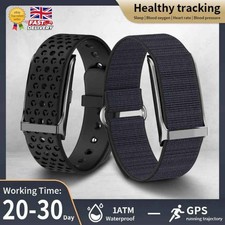
Selected fromfitness tracker band oneBay.co.uk.
Endnotes
1.
Source: link.springer.com
Link:https://link.springer.com/article/10.1186/s12966-024-01569-8
Source snippet
Correction: Impact of feedback generation and presentation on self-monitoring behaviors, dietary intake, physical activity, and w...
2.
Source: bmj.com
Title: bmj 2021 068047
Link:https://www.bmj.com/content/376/bmj-2021-068047
Source snippet
Effectiveness of physical activity monitors in adults: systematic review and meta-analysis | The BMJJanuary 26, 2022...
Published: January 26, 2022
3.
Source: bmj.com
Link:https://www.bmj.com/content/376/bmj-2021-068047.abstract
4.
Source: link.springer.com
Link:https://link.springer.com/article/10.1186/s12966-023-01555-6
5.
Source: bmj.com
Link:https://www.bmj.com/content/386/bmj-2023-078713
6.
Source: bmjopen.bmj.com
Link:https://bmjopen.bmj.com/content/13/7/e069966
7.
Source: bmjopen.bmj.com
Link:https://bmjopen.bmj.com/content/13/7/e069966.abstract
8.
Source: bmj.com
Link:https://www.bmj.com/content/376/bmj-2021-068465
9.
Source: bmj.com
Title: rapid responses
Link:https://www.bmj.com/content/376/bmj-2021-068047/rapid-responses
10.
Source: bmj.com
Title: submit a rapid response
Link:https://www.bmj.com/content/376/bmj-2021-068047/submit-a-rapid-response
11.
Source: bmj.com
Title: article info
Link:https://www.bmj.com/content/376/bmj-2021-068047/article-info
12.
Source: bmj.com
Link:https://www.bmj.com/content/376/bmj-2021-068047/related
13.
Source: bjsm.bmj.com
Link:https://bjsm.bmj.com/content/55/8/422
14.
Source: bjsm.bmj.com
Link:https://bjsm.bmj.com/content/56/23/1366
15.
Source: pubmed.ncbi.nlm.nih.gov
Link:https://pubmed.ncbi.nlm.nih.gov/26479070/
Source snippet
Does monitoring goal progress promote goal attainment? A meta-analysis of the experimental evidence - PubMedFebruary 1, 2016...
Published: February 1, 2016
16.
Source: pmc.ncbi.nlm.nih.gov
Link:https://pmc.ncbi.nlm.nih.gov/articles/PMC10765525/
Source snippet
PubMed Central (PMC)Impact of feedback generation and presentation on self-monitoring behaviors, dietary intake, physical activity, and w...
17.
Source: pubmed.ncbi.nlm.nih.gov
Link:https://pubmed.ncbi.nlm.nih.gov/31662031/
Source snippet
Self-regulation mechanisms in health behavior change: a systematic meta-review of meta-analyses, 2006-2017 - PubMed...
18.
Source: pmc.ncbi.nlm.nih.gov
Link:https://pmc.ncbi.nlm.nih.gov/articles/PMC7571594/
Source snippet
PubMed Central (PMC)Self-Regulation Mechanisms in Health Behaviour Change: A Systematic Meta-Review of Meta-Analyses, 2006–2017 - PMC...
19.
Source: pmc.ncbi.nlm.nih.gov
Link:https://pmc.ncbi.nlm.nih.gov/articles/PMC5887039/
20.
Source: pubmed.ncbi.nlm.nih.gov
Link:https://pubmed.ncbi.nlm.nih.gov/29567638/
Source snippet
Just-in-Time Feedback in Diet and Physical Activity Interventions: Systematic Review and Practical Design Framework - PubMed...
21.
Source: pubmed.ncbi.nlm.nih.gov
Link:https://pubmed.ncbi.nlm.nih.gov/30843082/
22.
Source: pmc.ncbi.nlm.nih.gov
Link:https://pmc.ncbi.nlm.nih.gov/articles/PMC10885474/
23.
Source: pmc.ncbi.nlm.nih.gov
Link:https://pmc.ncbi.nlm.nih.gov/articles/PMC6259669/
24.
Source: pmc.ncbi.nlm.nih.gov
Link:https://pmc.ncbi.nlm.nih.gov/articles/PMC12736852/
25.
Source: pmc.ncbi.nlm.nih.gov
Link:https://pmc.ncbi.nlm.nih.gov/articles/PMC12630729/
26.
Source: pmc.ncbi.nlm.nih.gov
Link:https://pmc.ncbi.nlm.nih.gov/articles/PMC12649445/
27.
Source: pmc.ncbi.nlm.nih.gov
Link:https://pmc.ncbi.nlm.nih.gov/articles/PMC11282379/
28.
Source: pubmed.ncbi.nlm.nih.gov
Link:https://pubmed.ncbi.nlm.nih.gov/38395892/
29.
Source: pubmed.ncbi.nlm.nih.gov
Link:https://pubmed.ncbi.nlm.nih.gov/38178230/
30.
Source: pubmed.ncbi.nlm.nih.gov
Link:https://pubmed.ncbi.nlm.nih.gov/37460164/
31.
Source: pmc.ncbi.nlm.nih.gov
Link:https://pmc.ncbi.nlm.nih.gov/articles/PMC10347518/
32.
Source: pmc.ncbi.nlm.nih.gov
Link:https://pmc.ncbi.nlm.nih.gov/articles/PMC10024875/
33.
Source: pmc.ncbi.nlm.nih.gov
Link:https://pmc.ncbi.nlm.nih.gov/articles/PMC10015600/
34.
Source: pmc.ncbi.nlm.nih.gov
Link:https://pmc.ncbi.nlm.nih.gov/articles/PMC9685716/
35.
Source: pmc.ncbi.nlm.nih.gov
Link:https://pmc.ncbi.nlm.nih.gov/articles/PMC9261070/
36.
Source: pubmed.ncbi.nlm.nih.gov
Link:https://pubmed.ncbi.nlm.nih.gov/35234658/
37.
Source: pmc.ncbi.nlm.nih.gov
Link:https://pmc.ncbi.nlm.nih.gov/articles/PMC8928046/
38.
Source: pmc.ncbi.nlm.nih.gov
Link:https://pmc.ncbi.nlm.nih.gov/articles/PMC9469733/
39.
Source: pmc.ncbi.nlm.nih.gov
Link:https://pmc.ncbi.nlm.nih.gov/articles/PMC8791066/
40.
Source: pmc.ncbi.nlm.nih.gov
Link:https://pmc.ncbi.nlm.nih.gov/articles/PMC8365685/
41.
Source: pubmed.ncbi.nlm.nih.gov
Link:https://pubmed.ncbi.nlm.nih.gov/33721605/
42.
Source: pmc.ncbi.nlm.nih.gov
Link:https://pmc.ncbi.nlm.nih.gov/articles/PMC8628117/
43.
Source: pubmed.ncbi.nlm.nih.gov
Link:https://pubmed.ncbi.nlm.nih.gov/31662031/?dopt=Abstract
44.
Source: pubmed.ncbi.nlm.nih.gov
Link:https://pubmed.ncbi.nlm.nih.gov/31856664/
45.
Source: pubmed.ncbi.nlm.nih.gov
Link:https://pubmed.ncbi.nlm.nih.gov/31027495/
46.
Source: pmc.ncbi.nlm.nih.gov
Link:https://pmc.ncbi.nlm.nih.gov/articles/PMC6371423/
47.
Source: pmc.ncbi.nlm.nih.gov
Link:https://pmc.ncbi.nlm.nih.gov/articles/PMC6215922/
48.
Source: pmc.ncbi.nlm.nih.gov
Link:https://pmc.ncbi.nlm.nih.gov/articles/PMC5875102/
49.
Source: pmc.ncbi.nlm.nih.gov
Link:https://pmc.ncbi.nlm.nih.gov/articles/PMC5729493/
50.
Source: pmc.ncbi.nlm.nih.gov
Link:https://pmc.ncbi.nlm.nih.gov/articles/PMC5652617/
51.
Source: pmc.ncbi.nlm.nih.gov
Link:https://pmc.ncbi.nlm.nih.gov/articles/PMC5654735/
52.
Source: pmc.ncbi.nlm.nih.gov
Link:https://pmc.ncbi.nlm.nih.gov/articles/PMC4969003/
53.
Source: pubmed.ncbi.nlm.nih.gov
Link:https://pubmed.ncbi.nlm.nih.gov/28494799/
54.
Source: pmc.ncbi.nlm.nih.gov
Link:https://pmc.ncbi.nlm.nih.gov/articles/PMC5370453/
55.
Source: pubmed.ncbi.nlm.nih.gov
Link:https://pubmed.ncbi.nlm.nih.gov/26058688/
56.
Source: pmc.ncbi.nlm.nih.gov
Link:https://pmc.ncbi.nlm.nih.gov/articles/PMC4975085/
57.
Source: pmc.ncbi.nlm.nih.gov
Link:https://pmc.ncbi.nlm.nih.gov/articles/PMC4845232/
58.
Source: pmc.ncbi.nlm.nih.gov
Link:https://pmc.ncbi.nlm.nih.gov/articles/PMC4842945/
59.
Source: pmc.ncbi.nlm.nih.gov
Link:https://pmc.ncbi.nlm.nih.gov/articles/PMC4721342/
60.
Source: pmc.ncbi.nlm.nih.gov
Link:https://pmc.ncbi.nlm.nih.gov/articles/PMC4479243/
61.
Source: pmc.ncbi.nlm.nih.gov
Link:https://pmc.ncbi.nlm.nih.gov/articles/PMC4812832/
62.
Source: pmc.ncbi.nlm.nih.gov
Link:https://pmc.ncbi.nlm.nih.gov/articles/PMC4266405/
63.
Source: pmc.ncbi.nlm.nih.gov
Link:https://pmc.ncbi.nlm.nih.gov/articles/PMC7140764/
64.
Source: pmc.ncbi.nlm.nih.gov
Link:https://pmc.ncbi.nlm.nih.gov/articles/PMC3529986/
65.
Source: pmc.ncbi.nlm.nih.gov
Link:https://pmc.ncbi.nlm.nih.gov/articles/PMC3849440/
66.
Source: pmc.ncbi.nlm.nih.gov
Link:https://pmc.ncbi.nlm.nih.gov/articles/PMC3774634/
67.
Source: pubmed.ncbi.nlm.nih.gov
Link:https://pubmed.ncbi.nlm.nih.gov/24066178/
68.
Source: pubmed.ncbi.nlm.nih.gov
Link:https://pubmed.ncbi.nlm.nih.gov/23194823/
69.
Source: pmc.ncbi.nlm.nih.gov
Link:https://pmc.ncbi.nlm.nih.gov/articles/PMC3415265/
70.
Source: pmc.ncbi.nlm.nih.gov
Link:https://pmc.ncbi.nlm.nih.gov/articles/PMC3112373/
71.
Source: pmc.ncbi.nlm.nih.gov
Link:https://pmc.ncbi.nlm.nih.gov/articles/PMC2047289/
72.
Source: pmc.ncbi.nlm.nih.gov
Link:https://pmc.ncbi.nlm.nih.gov/articles/PMC1874722/
73.
Source: pubmed.ncbi.nlm.nih.gov
Link:https://pubmed.ncbi.nlm.nih.gov/16297442/
74.
Source: pubmed.ncbi.nlm.nih.gov
Link:https://pubmed.ncbi.nlm.nih.gov/31973666/
75.
Source: pubmed.ncbi.nlm.nih.gov
Link:https://pubmed.ncbi.nlm.nih.gov/27169809/
76.
Source: pubmed.ncbi.nlm.nih.gov
Link:https://pubmed.ncbi.nlm.nih.gov/20207464/
77.
Source: pubmed.ncbi.nlm.nih.gov
Link:https://pubmed.ncbi.nlm.nih.gov/2489846/
78.
Source: pubmed.ncbi.nlm.nih.gov
Link:https://pubmed.ncbi.nlm.nih.gov/28988493/
79.
Source: ncbi.nlm.nih.gov
Link:https://www.ncbi.nlm.nih.gov/sites/myncbi/rebecca.krukowski.1/bibliography/public/
80.
Source: ncbi.nlm.nih.gov
Link:https://www.ncbi.nlm.nih.gov/sites/myncbi/rebecca.krukowski.1/bibliography/public/?sdirection=descending&sortby=updDate
81.
Source: ncbi.nlm.nih.gov
Link:https://www.ncbi.nlm.nih.gov/sites/myncbi/rebecca.krukowski.1/bibliography/public/?sdirection=descending&sortby=pubDate
Additional References
82.
Source: youtube.com
Title: BEHAVIOR CHANGE | Part 13: Organizing support: Use self-monitoring of behavior
Link:https://www.youtube.com/watch?v=DbbE_METIGA
Source snippet
What Is Self-monitoring For Behavioral Goals In CBT? - Cognitive Therapy Hub...
83.
Source: youtube.com
Title: What Is Self-monitoring For Behavioral Goals In CBT?
Link:https://www.youtube.com/watch?v=n6sB4piS06w
Source snippet
Why Is Self-Monitoring Important? - Cognitive Therapy Hub...
84.
Source: youtube.com
Title: Self Regulation Theory: Positive and Negative Feedback Loops
Link:https://www.youtube.com/watch?v=hz_UTLxYuV8
Source snippet
BEHAVIOR CHANGE | Part 13: Organizing support: Use self-monitoring of behavior...
85.
Source: youtube.com
Title: IO Psychology 9.3: Self Regulation
Link:https://www.youtube.com/watch?v=-yfVDTENEss
Source snippet
Feedback self-monitoring behavior change psychology Why Is Self-Monitoring Important? - Cognitive Therapy Hub...
86.
Source: researchgate.net
Link:https://www.researchgate.net/publication/385719380_A_Novel_Web_App_for_Dietary_Weight_Management_Development_Implementation_and_Usability_Study
87.
Source: researchgate.net
Link:https://www.researchgate.net/publication/378437640_Correction_Impact_of_feedback_generation_and_presentation_on_self-monitoring_behaviors_dietary_intake_physical_activity_and_weight_a_systematic_review_and_meta-analysis
88.
Source: sciencedirect.com
Link:https://www.sciencedirect.com/science/article/abs/pii/S1469029217304624
89.
Source: sciencedirect.com
Link:https://www.sciencedirect.com/science/article/pii/S1469029217304624
90.
Source: sciencedirect.com
Link:https://www.sciencedirect.com/org/science/article/pii/S1438887114000466
91.
Source: sciencedirect.com
Link:https://www.sciencedirect.com/science/article/pii/S0738399118307699