Within Better Habits
Why Doing It in the Same Context Helps
Repeating a behaviour in a similar place and situation can strengthen the association between the cue and the action.

On this page
- How context links cues and responses
- Choosing a repeatable setting
- What to do when routines vary
Page outline Jump by section
Introduction
Habits become automatic more readily when a behaviour is repeated in a recognisably similar situation. The important ingredient is not simply doing something many times, but repeatedly pairing the action with cues that recur: finishing breakfast, arriving at a particular desk, putting the kettle on, or reaching a predictable point in an evening routine. With repetition, those cues can begin to prompt the behaviour with less conscious deciding. Reviews of habit psychology therefore define habits as learned responses that become linked to recurring contexts.[PubMed]pubmed.ncbi.nlm.nih.govPub Med Psychology of HabitPsychology of Habit - PubMedSeptember 10, 2015…
This is why “same context” is useful advice for self-improvement, although it needs interpreting sensibly. A context is not necessarily one exact room at one exact minute. It can be a stable configuration of time, place, preceding action, people or other noticeable cues. The practical goal is to create a dependable relationship between a cue and a response, while choosing a cue that survives ordinary variations in life.
How context links cues and responses
Early repetitions of a new behaviour usually require conscious control: you remember the goal, notice an opportunity and decide to act. Habit formation gradually changes that relationship. By repeatedly performing the same response when a particular cue is present, the cue and action become associated in memory. Eventually, encountering the cue can make the response more readily accessible, reducing how much deliberate thought is needed to get started. This cue-driven mechanism is central to contemporary psychological accounts of habit.[ScienceDirect]sciencedirect.comHow do habits guide behavior? Perceived and actual triggers of habits in daily life - ScienceDirect…
A classic real-world study by Phillippa Lally and colleagues illustrates the process. Ninety-six participants chose a simple eating, drinking or activity behaviour and attempted it daily in the same context, such as “after breakfast”, for 12 weeks. Among participants whose data could be modelled, automaticity generally increased rapidly at first and then more slowly towards a plateau. The estimated time to reach 95% of a person’s eventual automaticity varied enormously, from 18 to 254 days. Missing a single opportunity did not materially derail the process. The useful lesson is therefore not that a habit takes a magical number of days, but that repeated enactment in a consistent context gradually strengthens automaticity.[Wiley Online Library]onlinelibrary.wiley.comWiley Online LibraryHow are habits formed: Modelling habit formation in the real world - Lally - 2010 - European Journal of Social Psycho…
More direct evidence for context stability came from a 2022 study of intentional habit building. In one experiment, 95 university students completed 2,482 study-habit repetitions over six weeks. Some were instructed to keep the place and time stable, whereas others deliberately varied them. A second dataset examined 308 habits recorded by 218 users of a habit-building app. Across both datasets, greater context stability predicted stronger automaticity and better attainment of repetition goals; automaticity partly explained the relationship between stable context and goal attainment.[PubMed]pubmed.ncbi.nlm.nih.govContext Stability in Habit Building Increases Automaticity and Goal Attainment - PubMedJune 10, 2022…
That finding is important because it suggests that a familiar context may do more than remind someone to begin. The researchers found evidence that matching the context in which earlier repetitions had occurred was also associated with smoother, more automatic performance once the behaviour was under way. In other words, familiar surroundings can support both the triggering and execution of a routine.[PubMed Central (PMC)]pmc.ncbi.nlm.nih.govPubMed Central (PMC)Context Stability in Habit Building Increases Automaticity and Goal Attainment - PMC…
Recent longitudinal evidence reinforces the overall picture without implying that context is the only determinant. A 2026 preregistered reanalysis following 254 people over six months found that context stability, behavioural frequency, autonomous motivation and several experiential factors were associated with habit strength. Participants showed different trajectories, including both habit formation and habit degradation. Stable context therefore appears to be one contributor within a dynamic learning process, not a guarantee that repetition will become automatic.[PubMed]pubmed.ncbi.nlm.nih.govWhat Makes a Habit? Investigating Potential Determinants of Habit Formation - PubMedApril 29, 2026…
Choosing a repeatable setting
The best context is usually one that occurs frequently, is easy to recognise and fits naturally into everyday life. “Read for ten minutes after I put my breakfast plate in the dishwasher” may provide a clearer recurring cue than “read more in the morning”. “Stretch after shutting down my work computer” may be more dependable than waiting until motivation to stretch appears.
Crucially, the cue does not have to be a clock time. In a randomised trial involving 192 adults, participants linked a nutrition behaviour either to a daily routine or to a specific time and then reported their behaviour and automaticity for 84 days. Both approaches produced increases in automaticity, with no significant difference between routine-based and time-based plans. Among those who successfully formed habits, median time to peak automaticity was 59 days. What mattered especially was repeatedly carrying out the planned behaviour in response to the chosen cue.[PubMed]pubmed.ncbi.nlm.nih.govOpen source on nih.gov.
That makes existing routines particularly useful anchors. They already happen reliably, so they provide ready-made points at which another behaviour can be attached. An exploratory flossing study of 50 people found that participants told to floss after tooth-brushing tended to develop stronger flossing automaticity than those told to floss before brushing; the difference was also evident at an eight-month follow-up. The researchers cautioned that the study was exploratory, but it illustrates why the position of a new action within an established routine may matter.[PubMed]pubmed.ncbi.nlm.nih.govOpen source on nih.gov.
A useful context can therefore be built from several kinds of cue:
- A preceding action: meditate after making coffee; prepare tomorrow’s lunch after clearing dinner.
- A place: begin focused work when sitting at a particular desk.
- A time or part of the day: take medication with breakfast or practise after arriving home.
- A recurring social setting: walk with the same colleague at lunchtime.
- A bundle of cues: the same approximate time, location and preceding routine occurring together.
There is no strong basis for insisting that one cue type is universally superior. Research on physical activity shows why. A study of 1,244 Australian adults examined the consistency of time, people, activity, routine, location and mood cues. Greater consistency in routine and mood was associated with stronger physical-activity automaticity, while consistent time and people were associated with more reported activity.[PubMed]pubmed.ncbi.nlm.nih.govOpen source on nih.gov.
A smaller 2024 prospective study produced a somewhat different pattern: habit played a stronger role in subsequent physical activity when participants exercised at a consistent time, did the same activity or were in a similar mood, but consistent place, people and position within a routine did not significantly strengthen that relationship. The sample contained only 68 students, so this is better treated as a warning against oversimplification than as proof that place or routine cues are unimportant. Different behaviours may depend on different configurations of cues.[PubMed Central (PMC)]pmc.ncbi.nlm.nih.govOpen source on nih.gov.
For practical purposes, a good cue has three qualities: it happens often enough, you reliably notice it, and it normally permits the intended response. A cue that repeatedly occurs when the action is impossible will not provide clean, dependable practice. “After lunch” may work well for a short walk if lunch normally leaves ten free minutes; it is a poor anchor if lunch is routinely followed by unpredictable meetings.
Stability does not mean perfect sameness
One common mistake is to interpret context stability as a demand for rigid scheduling. Habit research does not justify abandoning a behaviour because Tuesday’s routine was unusual or one repetition was missed. Lally and colleagues found that one missed opportunity did not materially affect subsequent habit development, and automaticity developed at very different speeds between individuals.[Wiley Online Library]onlinelibrary.wiley.comWiley Online LibraryHow are habits formed: Modelling habit formation in the real world - Lally - 2010 - European Journal of Social Psycho…
Nor does every contextual detail need to remain identical. What matters is whether the features that actually function as cues recur reliably enough to acquire predictive value. If someone’s reading habit is effectively cued by “getting into bed”, changing hotels may matter little. If it is strongly tied to sitting in one particular chair at home, travel may disrupt it substantially.
This distinction helps explain why research sometimes finds mixed results for individual cues such as place or exact time. Real contexts are bundles. When someone says they “always exercise after work”, that occasion may simultaneously include the time of day, leaving the workplace, particular clothing, a route home, a friend and a certain physiological state. Studies that isolate one feature inevitably capture only part of what the person has learnt. The physical-activity findings showing different associations for routine, mood, time, people and location illustrate this complexity.[PubMed]pubmed.ncbi.nlm.nih.govOpen source on nih.gov.
The broader evidence therefore supports recognisable consistency rather than brittle uniformity. The context needs to be similar enough for useful cues to recur, but the objective is not to reproduce every environmental detail.

What to do when routines vary
Stable contexts are easiest to create for people with predictable days, but the principle still works when work shifts, travel, caring responsibilities or changing timetables make exact times and places unreliable. The solution is to stabilise a cue that moves with the person rather than forcing stability where none exists.
A routine-based cue is often useful here. Someone whose lunch occurs anywhere between noon and 3 pm may struggle with “walk at 1 pm”, but “walk after lunch” can remain stable even when the clock changes. The randomised trial comparing time-based with routine-based cues found both capable of supporting habit formation, which makes routine anchoring a reasonable alternative when exact schedules are unstable.[PubMed]pubmed.ncbi.nlm.nih.govOpen source on nih.gov.
The same principle applies across locations. “Write at my home desk at 7 am” has two fragile dependencies. “Write for ten minutes after opening my laptop for the first work session” preserves a recognisable sequence whether the person is at home, in an office or travelling. The aim is to identify the feature of the situation that can recur.
For highly variable lives, it may also be useful to maintain a small number of repeatable versions rather than unlimited improvisation: for example, one exercise routine for home days and another for office days, each with its own clear cue. This is an inference from cue-dependent habit theory rather than a well-established formula tested head-to-head in trials, so it should not be mistaken for a rule. The underlying requirement remains consistent cue–response practice.[PubMed]pubmed.ncbi.nlm.nih.govPub Med Psychology of HabitPsychology of Habit - PubMedSeptember 10, 2015…
When a routine is temporarily interrupted, resuming the old cue–response pairing is usually more useful than treating the interruption as failure. Habit learning is cumulative, and a single missed opportunity is not equivalent to erasing the association.[Wiley Online Library]onlinelibrary.wiley.comWiley Online LibraryHow are habits formed: Modelling habit formation in the real world - Lally - 2010 - European Journal of Social Psycho…
Why moving or changing routines can break the spell
The dependence of habits on context becomes especially visible when the context disappears. In research on students transferring between universities, established behaviours such as exercising, newspaper reading and television watching were more likely to survive the move when important aspects of their old performance context remained intact. When relevant cues changed, habitual performance was disrupted and behaviour could become more responsive to current intentions.[PubMed]pubmed.ncbi.nlm.nih.govPub Med Changing circumstances, disrupting habitsPub Med Changing circumstances, disrupting habits
Larger observational evidence points in the same direction. An analysis of 18,053 participants in the UK Understanding Society survey found that recently moving home altered the relationship between environmental attitudes and commuting behaviour. Stronger environmental views predicted lower car use particularly after a recent move, when old contextual cues had been disrupted; this relationship weakened as people spent longer in the new setting and routines stabilised again.[PubMed Central (PMC)]pmc.ncbi.nlm.nih.govOpen source on nih.gov.
Experimental and theoretical reviews likewise emphasise that habits can be more context-specific than goal-directed actions. Changing the context can restore more deliberate control because the cues that normally retrieve the habitual response are absent or altered. This is one reason it is misleading to describe habits as permanently “hard-wired”: their efficiency often depends precisely on the environment in which they were learnt.[PubMed]pubmed.ncbi.nlm.nih.govOpen source on nih.gov.
For self-improvement, that vulnerability has two sides. Stable circumstances are helpful while building a wanted habit, because they repeatedly present the cues that support automatic action. But a house move, new job, holiday or major schedule change can weaken that support. When circumstances change, it can be worth deliberately choosing a new reliable cue instead of assuming the old habit will automatically transfer.
The useful rule is consistency, not perfection
Stable contexts work because they make repetitions more similar from one occasion to the next. That similarity gives recurring cues repeated opportunities to predict the same response. Over time, initiating the action can require less conscious remembering and deciding. Real-world longitudinal studies, controlled context manipulations and broader habit research all support this mechanism, while also showing substantial individual variation and differences between behaviours.[nih.gov]pubmed.ncbi.nlm.nih.govContext Stability in Habit Building Increases Automaticity and Goal Attainment - PubMedJune 10, 2022…
The practical standard is therefore modest: choose a cue that appears reliably, perform the intended action when that cue occurs, and keep the pairing reasonably consistent. An existing daily routine can be as useful as a clock time, and occasional disruptions do not invalidate the process. What makes repetition powerful is not the streak by itself. It is repeatedly teaching the same situation what comes next.
Amazon book picks
Further Reading
Books and field guides related to Why Doing It in the Same Context Helps. Use these as the next step if you want deeper reading beyond the article.
Atomic Habits
Rating: 3.5/5 from 7 Google Books ratings
The #1 New York Times bestseller. Over 25 million copies sold! Translated into 60+ languages! Tiny Changes, Remarkable Results No matter...
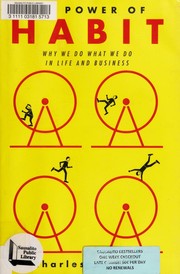
The Power of Habit
Rating: 4.0/5 from 145 Google Books ratings
Duhigg takes us to the edge of scientific discoveries that explain why habits exist and how they can be changed. Distilling information i...
Tiny Habits
Improving your life is much easier than you think. Whether it’s losing weight, sleeping more, or restoring your work/life balance – the s...
Good Habits, Bad Habits
'The world's leading expert on habits' - Matthew Syed, bestselling author of Black Box Thinking and Rebel IdeasWhat if you could harness...
eBay marketplace picks
Marketplace Samples
Live-tested eBay searches with available results related to this page.
Selected fromself improvement wall art oneBay.co.uk.


Endnotes
1.
Source: sciencedirect.com
Link:https://www.sciencedirect.com/science/article/pii/S002210311100254X
Source snippet
How do habits guide behavior? Perceived and actual triggers of habits in daily life - ScienceDirect...
2.
Source: onlinelibrary.wiley.com
Link:https://onlinelibrary.wiley.com/doi/pdf/10.1002/ejsp.674
Source snippet
Wiley Online LibraryHow are habits formed: Modelling habit formation in the real world - Lally - 2010 - European Journal of Social Psycho...
3.
Source: onlinelibrary.wiley.com
Link:https://onlinelibrary.wiley.com/doi/abs/10.1002/ejsp.674
Source snippet
Wiley Online LibraryHow are habits formed: Modelling habit formation in the real world - Lally - 2010 - European Journal of Social Psycho...
4.
Source: sciencedirect.com
Title: Beyond deliberate self-control: Habits automatically achieve long-term goals
Link:https://www.sciencedirect.com/science/article/pii/S2352250X24000939
5.
Source: sciencedirect.com
Title: Habit and climate change
Link:https://www.sciencedirect.com/science/article/pii/S2352154621000425
6.
Source: sciencedirect.com
Title: Neural autopilot and context-sensitivity of habits
Link:https://www.sciencedirect.com/science/article/pii/S2352154621001406
7.
Source: sciencedirect.com
Link:https://www.sciencedirect.com/science/article/pii/S0191886919304258
8.
Source: sciencedirect.com
Link:https://www.sciencedirect.com/science/article/pii/S019188691730274X
9.
Source: sciencedirect.com
Title: The habitual consumer
Link:https://www.sciencedirect.com/science/article/pii/S1057740809001065
10.
Source: onlinelibrary.wiley.com
Link:https://onlinelibrary.wiley.com/doi/10.1002/ejsp.674?947f74f7_page=5&b158b201_page=5
11.
Source: onlinelibrary.wiley.com
Link:https://onlinelibrary.wiley.com/doi/10.1002/ejsp.674?2d235898_page=2&538fcd4b_page=6&d2101103_page=8&d73ad837_page=2
12.
Source: onlinelibrary.wiley.com
Link:https://onlinelibrary.wiley.com/doi/abs/10.1002/ejsp.674?source=content_type%3Areact%7Cfirst_level_url%3Aarticle%7Csection%3Amain_content%7Cbutton%3Abody_link
13.
Source: onlinelibrary.wiley.com
Link:https://onlinelibrary.wiley.com/doi/abs/10.1002/ejsp.674?538fcd4b_page=6&947f74f7_page=5
14.
Source: onlinelibrary.wiley.com
Link:https://onlinelibrary.wiley.com/doi/abs/10.1002/ejsp.674?aff_id=24772
15.
Source: onlinelibrary.wiley.com
Link:https://onlinelibrary.wiley.com/doi/abs/10.1002/ejsp.674?msockid=038ed114f43667dd0790c4bef5146634
16.
Source: onlinelibrary.wiley.com
Link:https://onlinelibrary.wiley.com/doi/abs/10.1002/ejsp.674?MixPanelId=15e3fe314440-0468d8411-64220f54-100000-15e3fe314460
17.
Source: onlinelibrary.wiley.com
Link:https://onlinelibrary.wiley.com/doi/abs/10.1002/ejsp.674?cf_chl_jschl_tk=pmd_EwcJDaCFBR9OVEL1O_0qjioww0Gc86ZzpBvCBFhrDcE-1635261061-0-gqNtZGzNAjujcnBszQi9
18.
Source: onlinelibrary.wiley.com
Link:https://onlinelibrary.wiley.com/doi/10.1002/ejsp.674?947f74f7_page=6&b158b201_page=5
19.
Source: sciencedirect.com
Title: The habitual consumer
Link:https://www.sciencedirect.com/science/article/abs/pii/S1057740809001065
20.
Source: sciencedirect.com
Link:https://www.sciencedirect.com/science/article/pii/S0022249620301000
21.
Source: pubmed.ncbi.nlm.nih.gov
Title: Pub Med Psychology of Habit
Link:https://pubmed.ncbi.nlm.nih.gov/26361052/
Source snippet
Psychology of Habit - PubMedSeptember 10, 2015...
Published: September 10, 2015
22.
Source: pmc.ncbi.nlm.nih.gov
Link:https://pmc.ncbi.nlm.nih.gov/articles/PMC4566897/
Source snippet
PubMed Central (PMC)A review and analysis of the use of ‘habit’ in understanding, predicting and influencing health-related behaviour - PMC...
23.
Source: pubmed.ncbi.nlm.nih.gov
Link:https://pubmed.ncbi.nlm.nih.gov/35756236/
Source snippet
Context Stability in Habit Building Increases Automaticity and Goal Attainment - PubMedJune 10, 2022...
Published: June 10, 2022
24.
Source: pmc.ncbi.nlm.nih.gov
Link:https://pmc.ncbi.nlm.nih.gov/articles/PMC9226889/
Source snippet
PubMed Central (PMC)Context Stability in Habit Building Increases Automaticity and Goal Attainment - PMC...
25.
Source: pubmed.ncbi.nlm.nih.gov
Link:https://pubmed.ncbi.nlm.nih.gov/42053513/
Source snippet
What Makes a Habit? Investigating Potential Determinants of Habit Formation - PubMedApril 29, 2026...
Published: April 29, 2026
26.
Source: pubmed.ncbi.nlm.nih.gov
Link:https://pubmed.ncbi.nlm.nih.gov/33405284/
27.
Source: pubmed.ncbi.nlm.nih.gov
Link:https://pubmed.ncbi.nlm.nih.gov/22989272/
28.
Source: pubmed.ncbi.nlm.nih.gov
Link:https://pubmed.ncbi.nlm.nih.gov/25864705/
29.
Source: pmc.ncbi.nlm.nih.gov
Link:https://pmc.ncbi.nlm.nih.gov/articles/PMC11201238/
30.
Source: pubmed.ncbi.nlm.nih.gov
Link:https://pubmed.ncbi.nlm.nih.gov/38920777/
31.
Source: pubmed.ncbi.nlm.nih.gov
Title: Pub Med Changing circumstances, disrupting habits
Link:https://pubmed.ncbi.nlm.nih.gov/15982113/
32.
Source: pmc.ncbi.nlm.nih.gov
Link:https://pmc.ncbi.nlm.nih.gov/articles/PMC4847906/
33.
Source: pubmed.ncbi.nlm.nih.gov
Link:https://pubmed.ncbi.nlm.nih.gov/27120333/
34.
Source: pubmed.ncbi.nlm.nih.gov
Link:https://pubmed.ncbi.nlm.nih.gov/34713424/
35.
Source: pmc.ncbi.nlm.nih.gov
Title: Pub Med Central (PMC)Habit and persistence
Link:https://pmc.ncbi.nlm.nih.gov/articles/PMC10842266/
36.
Source: pmc.ncbi.nlm.nih.gov
Link:https://pmc.ncbi.nlm.nih.gov/articles/PMC13059544/
37.
Source: pmc.ncbi.nlm.nih.gov
Link:https://pmc.ncbi.nlm.nih.gov/articles/PMC13114073/
38.
Source: pubmed.ncbi.nlm.nih.gov
Link:https://pubmed.ncbi.nlm.nih.gov/41664442/
39.
Source: pmc.ncbi.nlm.nih.gov
Link:https://pmc.ncbi.nlm.nih.gov/articles/PMC11920387/
40.
Source: pmc.ncbi.nlm.nih.gov
Link:https://pmc.ncbi.nlm.nih.gov/articles/PMC11893630/
41.
Source: pubmed.ncbi.nlm.nih.gov
Link:https://pubmed.ncbi.nlm.nih.gov/39702740/
42.
Source: pmc.ncbi.nlm.nih.gov
Link:https://pmc.ncbi.nlm.nih.gov/articles/PMC11641623/
43.
Source: pubmed.ncbi.nlm.nih.gov
Link:https://pubmed.ncbi.nlm.nih.gov/39685110/
44.
Source: pmc.ncbi.nlm.nih.gov
Link:https://pmc.ncbi.nlm.nih.gov/articles/PMC11574773/
45.
Source: pmc.ncbi.nlm.nih.gov
Link:https://pmc.ncbi.nlm.nih.gov/articles/PMC11598352/
46.
Source: pubmed.ncbi.nlm.nih.gov
Link:https://pubmed.ncbi.nlm.nih.gov/39456116/
47.
Source: pubmed.ncbi.nlm.nih.gov
Link:https://pubmed.ncbi.nlm.nih.gov/39225981/
48.
Source: pmc.ncbi.nlm.nih.gov
Link:https://pmc.ncbi.nlm.nih.gov/articles/PMC11161714/
49.
Source: pubmed.ncbi.nlm.nih.gov
Link:https://pubmed.ncbi.nlm.nih.gov/38787601/
50.
Source: pubmed.ncbi.nlm.nih.gov
Link:https://pubmed.ncbi.nlm.nih.gov/38149526/
51.
Source: pmc.ncbi.nlm.nih.gov
Link:https://pmc.ncbi.nlm.nih.gov/articles/PMC7617183/
52.
Source: pmc.ncbi.nlm.nih.gov
Link:https://pmc.ncbi.nlm.nih.gov/articles/PMC9813642/
53.
Source: pmc.ncbi.nlm.nih.gov
Link:https://pmc.ncbi.nlm.nih.gov/articles/PMC9372943/
54.
Source: pmc.ncbi.nlm.nih.gov
Link:https://pmc.ncbi.nlm.nih.gov/articles/PMC12318445/
55.
Source: pmc.ncbi.nlm.nih.gov
Link:https://pmc.ncbi.nlm.nih.gov/articles/PMC8231551/
56.
Source: pmc.ncbi.nlm.nih.gov
Link:https://pmc.ncbi.nlm.nih.gov/articles/PMC8250330/
57.
Source: pmc.ncbi.nlm.nih.gov
Link:https://pmc.ncbi.nlm.nih.gov/articles/PMC9207816/
58.
Source: pubmed.ncbi.nlm.nih.gov
Link:https://pubmed.ncbi.nlm.nih.gov/33502088/
59.
Source: pmc.ncbi.nlm.nih.gov
Link:https://pmc.ncbi.nlm.nih.gov/articles/PMC8774291/
60.
Source: pmc.ncbi.nlm.nih.gov
Link:https://pmc.ncbi.nlm.nih.gov/articles/PMC7645026/
61.
Source: pubmed.ncbi.nlm.nih.gov
Link:https://pubmed.ncbi.nlm.nih.gov/32228721/
62.
Source: pmc.ncbi.nlm.nih.gov
Link:https://pmc.ncbi.nlm.nih.gov/articles/PMC7106637/
63.
Source: pmc.ncbi.nlm.nih.gov
Link:https://pmc.ncbi.nlm.nih.gov/articles/PMC6895142/
64.
Source: pubmed.ncbi.nlm.nih.gov
Link:https://pubmed.ncbi.nlm.nih.gov/31396122/
65.
Source: pmc.ncbi.nlm.nih.gov
Link:https://pmc.ncbi.nlm.nih.gov/articles/PMC6667662/
66.
Source: pubmed.ncbi.nlm.nih.gov
Link:https://pubmed.ncbi.nlm.nih.gov/30572936/
67.
Source: pmc.ncbi.nlm.nih.gov
Link:https://pmc.ncbi.nlm.nih.gov/articles/PMC6302524/
68.
Source: pmc.ncbi.nlm.nih.gov
Link:https://pmc.ncbi.nlm.nih.gov/articles/PMC6105188/
69.
Source: pubmed.ncbi.nlm.nih.gov
Link:https://pubmed.ncbi.nlm.nih.gov/28650196/
70.
Source: pubmed.ncbi.nlm.nih.gov
Link:https://pubmed.ncbi.nlm.nih.gov/28374463/?dopt=Abstract
71.
Source: pmc.ncbi.nlm.nih.gov
Link:https://pmc.ncbi.nlm.nih.gov/articles/PMC4975085/
72.
Source: pmc.ncbi.nlm.nih.gov
Link:https://pmc.ncbi.nlm.nih.gov/articles/PMC4216661/
73.
Source: pmc.ncbi.nlm.nih.gov
Link:https://pmc.ncbi.nlm.nih.gov/articles/PMC3944885/
74.
Source: pmc.ncbi.nlm.nih.gov
Link:https://pmc.ncbi.nlm.nih.gov/articles/PMC3505409/
75.
Source: pmc.ncbi.nlm.nih.gov
Link:https://pmc.ncbi.nlm.nih.gov/articles/3505409/
76.
Source: pmc.ncbi.nlm.nih.gov
Link:https://pmc.ncbi.nlm.nih.gov/articles/PMC3489688/
77.
Source: pubmed.ncbi.nlm.nih.gov
Link:https://pubmed.ncbi.nlm.nih.gov/21749245/
78.
Source: pmc.ncbi.nlm.nih.gov
Link:https://pmc.ncbi.nlm.nih.gov/articles/PMC13193246/
79.
Source: pubmed.ncbi.nlm.nih.gov
Link:https://pubmed.ncbi.nlm.nih.gov/36437536/
Additional References
80.
Source: youtube.com
Title: How Your Environment Quietly Controls Your Habits
Link:https://www.youtube.com/watch?v=uGWELW82Eoc
Source snippet
Phillippa Lally habit formation automaticity context Habit Formation v2.0: The Neuroscience of Instant Change...
81.
Source: youtube.com
Title: It Takes 21 Days to Build a Habit
Link:https://www.youtube.com/watch?v=gcJp4qUOiFY
Source snippet
The Science of Good and Bad Habits with Dr. Wendy Wood...
82.
Source: youtube.com
Title: How Does Habit Formation Impact UX Design Choices
Link:https://www.youtube.com/watch?v=CbtvMTlEfwM
Source snippet
It Takes 21 Days to Build a Habit - And That's Completely Wrong...
83.
Source: tandfonline.com
Link:https://www.tandfonline.com/doi/full/10.1080/08964289.2015.1017549
84.
Source: frontiersin.org
Link:https://www.frontiersin.org/journals/psychology/articles/10.3389/fpsyg.2022.994177/full
85.
Source: preprints.org
Link:https://www.preprints.org/manuscript/202404.1402
86.
Source: escholarship.org
Link:https://escholarship.org/uc/item/8114v91g
87.
Source: mdpi.com
Link:https://www.mdpi.com/2076-328X/14/6/445
88.
Source: digital.library.adelaide.edu.au
Link:https://digital.library.adelaide.edu.au/items/f62cdbf3-4292-4978-8703-61106e4739d8
89.
Source: youtube.com
Title: The Science of Making & Breaking Habits
Link:https://www.youtube.com/watch?v=Wcs2PFz5q6g
Source snippet
How Your Environment Quietly Controls Your Habits...