Within Better Habits
Make the Decision Before Temptation Arrives
Deciding in advance can protect a goal by shrinking the number of choices you must make in a tempting or tiring moment.

On this page
- Why in the moment choices are fragile
- Ways to precommit without overcomplicating life
- Matching precommitment to the problem
Page outline Jump by section
Introduction
Precommitment is a way of protecting a goal by making an important decision before temptation, fatigue or procrastination can distort it. Rather than planning to resist an unwanted choice later, you change the situation now: block the distracting option, lock away the money, impose a deadline, automate the desired action or attach a consequence to backing out. In behavioural research, the defining feature is that your calmer present self deliberately restricts what your future self can do.
The attraction is straightforward. Many self-improvement failures are not failures of knowledge: people already know they would rather save than impulse-buy, work than scroll, or exercise than postpone. The difficulty is that the balance of incentives changes when an immediate reward becomes available. Precommitment moves the decisive moment to an earlier point, when the long-term goal has more influence. Experimental and field evidence shows that this can improve behaviour, although commitment devices vary greatly in effectiveness and can become counterproductive when they remove flexibility that turns out to be genuinely useful.
Why in-the-moment choices are fragile
Imagine deciding on Sunday evening that you will study for an hour after work on Monday. At 7 pm on Monday, however, studying is no longer being compared abstractly with the benefits of finishing a qualification. It is being compared with a sofa, takeaway food, messages and immediately entertaining content. The options have not merely become more concrete; their rewards occur at different times.
Economists describe one contributor to this problem aspresent bias: immediate costs and rewards can receive disproportionately high weight compared with future ones. The strength of present bias varies considerably between people, studies and types of reward, so it should not be treated as a universal explanation for every lapse. But the broader pattern it describes is familiar: a choice that looks worthwhile in advance can lose against a competing option once that option becomes immediately available.
Precommitment changes this contest. Instead of asking your future self to choose the long-term option while temptation remains available, you remove or penalise the alternative in advance. In laboratory research comparing these strategies directly, participants were more successful at choosing larger delayed rewards when they could make a binding advance choice than when they had to continue resisting a smaller immediate reward during the waiting period. The study therefore distinguished two routes to self-control:resisting temptation after it appearsandpreventing the tempting decision from arising in the first place.
That distinction is more important than it initially sounds. An implementation intention such as “if it is 7 pm, I will start studying” specifies what you intend to do. A precommitment such as “the distracting sites will be inaccessible from 7 to 8 pm” alters what you will be able to choose. The two methods can complement one another, but they solve different problems.
Precommitment can also reduce the mental cost of repeatedly rejecting an attractive option. Research on temptation has found that people sometimes value menus from which tempting alternatives have already been removed, consistent with the idea that simply having to reject an option carries a subjective cost. In everyday terms, it may be easier not to have biscuits in the cupboard than to conduct a fresh internal debate each time you walk into the kitchen.
Ways to precommit without overcomplicating life
A useful commitment device does not need to involve contracts or money. Its essential job is to make a predictable future failure harder to enact. The strongest design depends onwhythe behaviour normally breaks down.
Remove access to the competing option.If the same temptation repeatedly wins, eliminating it during the vulnerable period is the most literal form of precommitment. A person who loses an evening to entertainment sites might schedule an automatic block before the evening begins. Someone trying not to buy convenience food might simply avoid bringing it home. Someone prone to online impulse purchases might remove stored card details or access to shopping apps. These measures work by shrinking the future choice set rather than strengthening an intention.
The principle has been tested experimentally in digital environments. In a 2023 experiment, participants doing a tedious productivity task could pay to remove access to tempting YouTube content. Researchers found both undercommitment and overcommitment: some people restricted themselves unnecessarily, but more underestimated how costly temptation would prove, and the losses associated with undercommitting were larger overall. That result is a useful corrective to two simplistic views: neither “you should always lock yourself down” nor “you should just learn discipline” fits the evidence particularly well.
Make future money unavailable for impulsive use.Savings provides unusually clear field evidence because commitment can be built into the account itself. In a randomised study in the Philippines, bank customers were offered an account in which they chose a savings target or date and restricted their ability to withdraw until the condition was met. About 28% of those offered the product opened one. After a year, assignment to the treatment increased average savings balances by 81% relative to the control group. The mechanism was not motivational messaging: the product deliberately reduced liquidity.
The everyday version need not be so restrictive. Moving money automatically on payday into an account that is deliberately inconvenient to access is a milder form. The important design feature is timing: the saving decision is executed before the money competes with dozens of attractive purchases.
Use deadlines when delay is the temptation.Procrastination differs from an obvious vice because the tempting choice is usually “not yet”. A deadline can create a cost for repeated postponement and therefore act as a commitment device.
A well-known 2002 study by Dan Ariely and Klaus Wertenbroch found that people voluntarily imposed costly deadlines on themselves and that these could improve performance, although externally imposed evenly spaced deadlines performed better. That finding became an influential example of self-control through precommitment.
It now requires an important qualification. A preregistered replication published inPsychological Sciencein July 2026 didnotreproduce the original Study 2 result: changing deadline structures produced negligible differences on the main performance measures, and evenly spaced deadlines did not emerge as especially effective. This does not show that deadlines never help procrastination, but it does weaken the case for treating one famous experiment as definitive evidence that self-imposed scheduling reliably solves the problem.
For practical purposes, this suggests using deadlines because they change a real constraint — a submission, booking, meeting or promised delivery — rather than because merely writing an arbitrary date in a diary is expected to transform behaviour.
Put something at stake.A harder commitment device makes failure costly. You might make a deposit that is returned only if you complete a behaviour, arrange accountability where a missed action has a predetermined consequence, or enter a structured commitment contract.
The approach has produced substantial effects in some settings. In a randomised smoking-cessation study in the Philippines, smokers could deposit their own money for six months and recover it only by passing a biochemical test showing they had stopped smoking. Only 11% of smokers offered the programme took it up, but those offered it were about three percentage points more likely than controls to pass the six-month test, and the effect persisted in surprise testing at 12 months. The low uptake is as informative as the positive effect: a demanding device can work for some people while being unattractive to most.
More recent exercise research reaches a similar conclusion about consequences. A 2024 randomised study involving 1,629 gym members compared soft, non-incentivised commitments with hard contracts involving participants’ own money. Being offered the hard contract increased monthly gym visits by 21% relative to control, compared with an 8% increase for the soft version.
The practical lesson is not to put money at risk whenever motivation dips. It is that stronger commitments can be useful when a weak promise has already failed repeatedly and the intended behaviour is sufficiently predictable.
Matching precommitment to the problem
The best precommitment is usually the smallest restriction that reliably prevents the particular failure you keep observing. Adding severity for its own sake can create unnecessary cost.
A useful matching rule is:
- If an accessible temptation repeatedly wins:remove or delay access to it during the vulnerable period.
- If spending happens before saving:automate or separate the money before discretionary spending starts.
- If work repeatedly slides into “later”:create a real intermediate delivery point, appointment or external commitment rather than relying only on an aspirational personal deadline.
- If you frequently abandon a measurable behaviour despite intending to do it:consider accountability or a modest stake.
- If circumstances genuinely change from day to day:favour soft commitment and friction rather than an irreversible penalty.
This last case matters because commitment always tradesfreedom from temptationagainstflexibility. You do not know everything today that your future self will know. Blocking entertainment during an agreed writing hour carries little downside if you are confident you want to work. Locking away all spare cash for a year could be harmful if an emergency arises. Recent economic work emphasises precisely this cost: commitment can solve a self-control problem while simultaneously preventing sensible responses to new information.
There is also no guarantee that people correctly identify when they need restriction. In a study of 1,248 people involving gym-attendance contracts, commitment take-up was high and the contracts increased exercise, yet uptake was poorly targeted to measured time inconsistency. Strikingly, roughly half the people willing to take a contract committing them tomoregym attendance were also willing to take one committing them tolessattendance. Model-based welfare estimates in that study suggested that offering the contracts reduced consumer surplus compared with an equivalent exercise subsidy. The finding is a warning against assuming that willingness to constrain yourself proves that the constraint is beneficial.
A school field experiment makes the same point from another direction. More than a third of middle-school pupils opted into a behavioural commitment device when enrolment required an active choice, and more than half stayed in when enrolment was the default. Yet taking up the device did not improve their behaviour. Demand for commitment and effectiveness of commitment are therefore separate questions.

Make the restriction proportionate
Precommitment works best as engineering, not punishment. A good device targets a known failure mode, activates before the vulnerable choice, and interferes as little as possible with the rest of life.
Start withreversible frictionwhen the consequences of being wrong are meaningful. Put the distracting device in another room before beginning work. Schedule an app block that can be overridden only with deliberate effort. Prepare the healthy meal before becoming hungry. Transfer a sensible amount to savings automatically while retaining an emergency reserve. These interventions still leave an escape route, but they turn deviation from the default into an active decision.
Escalate tohard commitmentwhen three conditions line up: the failure pattern is well established, the desired behaviour is clear, and unexpected circumstances are unlikely to make the commitment harmful. A modest deposit contract for gym visits may meet those conditions; an inflexible financial restriction affecting essential expenses probably does not.
The distinction between hard and soft commitment has long been central to the research literature. Hard devices materially restrict choice or impose a penalty; soft ones rely on psychological, social or procedural costs. Neither is universally superior. Hard commitment offers stronger protection but carries larger error costs. Soft commitment preserves flexibility but may collapse at exactly the moment it is supposed to protect.
One sensible way to calibrate the choice is to examine your own behavioural record rather than your confidence. If you have planned the same action ten times and completed it twice, another motivational promise supplies little new information. That pattern is evidence that the decision point itself needs redesigning. If you normally follow through and occasionally miss because circumstances genuinely change, stronger restrictions may solve a problem you do not have.
The goal is fewer negotiations with yourself
The deepest advantage of precommitment is not that it makes a person more disciplined. It makes discipline less relevant at a predictable moment of weakness.
Instead of arriving home tired and deciding whether to exercise, the class can already be booked and paid for. Instead of deciding how much to save after a month of spending, the transfer can occur on payday. Instead of opening a distracting site and then trying to close it, access can already be blocked. The useful question is therefore not merely, “How can I resist this next time?” It is, “Which decision can I make earlier so there is less to resist?”
The evidence does not justify turning life into a maze of locks, penalties and rigid rules. Commitment products can have low uptake, people can misjudge their own need for them, and inflexible arrangements can be costly when reality changes. But across savings, smoking, exercise and controlled laboratory tasks, the research demonstrates a durable principle: when a recurring failure is caused by a predictable future choice, altering that choicebeforethe tempting moment can sometimes accomplish what another intention cannot.
Amazon book picks
Further Reading
Books and field guides related to Make the Decision Before Temptation Arrives. Use these as the next step if you want deeper reading beyond the article.
Nudge: Improving Decisions About Health, Wealth, and Happiness
Rating: 3.5/5 from 29 Google Books ratings
Thaler and Sunstein offer a groundbreaking discussion of how to apply the science of choice to nudge people toward decisions that can imp...
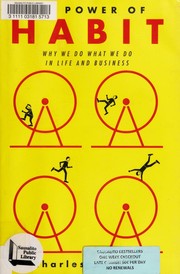
The Power of Habit
Rating: 4.0/5 from 145 Google Books ratings
In The Power of Habit, award-winning business reporter Charles Duhigg takes us to the thrilling edge of scientific discoveries that expla...
The Willpower Instinct
Based on Stanford University psychologist Kelly McGonigal's wildly popular course "The Science of Willpower," The Willpower Instinct is t...
Thinking, Fast and Slow
Why is there more chance we'll believe something if it's in a bold type face? Why are judges more likely to deny parole before lunch? Why...
eBay marketplace picks
Marketplace Samples
Live-tested eBay searches with available results related to this page.
Selected frommotivational wall art oneBay.co.uk.




Endnotes
1.
Source: annualreviews.org
Title: Commitment Devices | Annual Reviews
Link:https://www.annualreviews.org/doi/pdf/10.1146/annurev.economics.102308.124324
2.
Source: annualreviews.org
Title: Commitment Devices | Annual Reviews
Link:https://www.annualreviews.org/content/journals/10.1146/annurev.economics.102308.124324
3.
Source: youtube.com
Title: Self control: Dan Ariely at TEDx Duke
Link:https://www.youtube.com/watch?v=PPQhj6ktYSo
Source snippet
Tying Your Own Hands: How Commitment Devices Outsmart Future You...
4.
Source: youtube.com
Title: Tying Your Own Hands: How Commitment Devices Outsmart Future You
Link:https://www.youtube.com/watch?v=3oKstOf247Q
Source snippet
Behavioral economics: making behavior change stick in the long term (Katherine Milkman)...
5.
Source: youtube.com
Link:https://www.youtube.com/watch?v=8tqy9VPd8DQ
Source snippet
Present Bias Explained (Why We Procrastinate and Avoid Saving)...
6.
Source: youtube.com
Title: Present Bias Explained (Why We Procrastinate and Avoid Saving)
Link:https://www.youtube.com/watch?v=9KEtG_ek7Vk
Source snippet
What is Precommitment | Explained in 2 min...
7.
Source: youtube.com
Title: What is Precommitment | Explained in 2 min
Link:https://www.youtube.com/watch?v=WuS8yRywzdo
Source snippet
Precommitment commitment device behavioral economics temptation Tying Your Own Hands: How Commitment Devices Outsmart Future You...
Additional References
8.
Source: academic.oup.com
Link:https://academic.oup.com/qje/article-abstract/121/2/635/1884028?source=post_page—————————
Source snippet
OUP AcademicTying Odysseus to the Mast: Evidence From a [Commitment Savings]({{ 'locked-savings/' | relative_url }}) Product in the Philippines* | The Quarterly Journal of Economi...
9.
Source: academic.oup.com
Link:https://academic.oup.com/ej/article/131/636/1788/5912830
Source snippet
OUP AcademicMeta-Analysis of Present-Bias Estimation using Convex Time Budgets | The Economic Journal | Oxford AcademicSeptember 29, 2020...
Published: September 29, 2020
10.
Source: pmc.ncbi.nlm.nih.gov
Title: Pub Med Central (PMC)Quantifying the subjective cost of self-control in humans
Link:https://pmc.ncbi.nlm.nih.gov/articles/PMC8536396/
Source snippet
PubMed Central (PMC)Quantifying the subjective cost of self-control in humans - PMCAugust 31, 2021...
Published: August 31, 2021
11.
Source: sciencedirect.com
Link:https://www.sciencedirect.com/science/article/pii/S0167268118303123
Source snippet
Can interventions affect commitment demand? A field experiment on food choice - ScienceDirect...
12.
Source: pmc.ncbi.nlm.nih.gov
Title: Pub Med Central (PMC)Restricting Temptations: Neural Mechanisms of Precommitment
Link:https://pmc.ncbi.nlm.nih.gov/articles/PMC3725418/
Source snippet
PubMed Central (PMC)Restricting Temptations: Neural Mechanisms of Precommitment - PMC...
13.
Source: sciencedirect.com
Link:https://www.sciencedirect.com/science/article/pii/S0167268123000197
Source snippet
Too much commitment? An online experiment with tempting YouTube content - ScienceDirect...
14.
Source: pubs.aeaweb.org
Title: AEA Publications Why Don’t Present-Biased Agents Make Commitments?
Link:https://pubs.aeaweb.org/doi/10.1257/aer.p20151084
Source snippet
AEA PublicationsWhy Don't Present-Biased Agents Make Commitments? - American Economic Association...
15.
Source: annualreviews.org
Title: Annual Reviews Commitment Devices | Annual Reviews
Link:https://www.annualreviews.org/doi/10.1146/annurev.economics.102308.124324
Source snippet
Annual ReviewsCommitment Devices | Annual ReviewsSeptember 4, 2010...
Published: September 4, 2010
16.
Source: psychologicalscience.org
Link:https://www.psychologicalscience.org/journals/psychological-science/1467-9280.00441/
17.
Source: psychologicalscience.org
Link:https://www.psychologicalscience.org/journals/psychological-science/09567976261460772/