Within Better Habits
Should You Track Outcomes or Daily Actions?
Outcomes provide direction, while controllable behaviours give you something specific to execute and measure.

On this page
- What outcomes are good for
- Why behaviours are easier to manage
- Linking the two levels
Page outline Jump by section
Introduction
Outcome goals and daily behaviours do different jobs. An outcome such as losing 10 kilograms, passing an examination, running a faster 10K or saving £5,000 gives direction and a standard for judging progress. But it is not usually something you can perform today. A controllable behaviour — walking after lunch, completing a practice set, following a planned training session or transferring money on payday — is an action you can actually execute.
The most useful approach is therefore not to choose outcomes or behaviours, but to connect them. Research on goal setting shows that clear, appropriately challenging goals can improve performance, while research on implementation intentions and progress monitoring shows why goals become more useful when translated into specific actions and tracked.[ScienceDirect]sciencedirect.comA meta-analytic study of the effects of goal setting on task performance: 1966–1984 - ScienceDirect…
For self-improvement, the practical distinction is simple: use outcomes to decide where you are going; use controllable behaviours to decide what you do next.
What outcomes are good for
Outcome goals describe a desired state rather than the immediate action that produces it. “Get promoted”, “reach a healthy weight”, “publish a novel” and “save three months of expenses” are all outcomes. They matter because they provide direction, establish priorities and make it possible to compare the present with a desired future.
This role fits the long history of goal-setting research. A major 1987 meta-analysis found strong support for the performance benefits of specific, difficult goals compared with easy goals or vague instructions such as “do your best”. Goal-setting theory subsequently explained these effects partly through greater focus, effort, persistence and strategy development. Feedback is important too: a target is much less useful when people cannot tell whether they are moving towards it.[ScienceDirect]sciencedirect.comA meta-analytic study of the effects of goal setting on task performance: 1966–1984 - ScienceDirect…
An outcome can therefore answer questions that a daily checklist cannot:
- What am I trying to change? “Build a £6,000 emergency fund.”
- How much change would count as success? “Complete the course by December.”
- Which competing activities deserve priority? Training for a half-marathon implies different choices from simply “getting fitter”.
- Is the current approach working over time? If the outcome indicator is not moving, the behaviours beneath it may need to change.
That makes outcomes useful as a navigation instrument. The problem begins when they are also treated as the primary unit of daily control.
Imagine two people who both want to reduce their 5K time to under 25 minutes. They can set that target, care deeply about it and check their stopwatch repeatedly. None of those acts makes them faster. Improvement comes through the training they can perform — running planned sessions, recovering adequately and progressively adjusting the workload. The finishing time remains useful, but mainly as feedback on whether those actions are producing the intended result.
There is also an important qualification to the familiar advice that goals should always be highly specific and difficult. Research on complex tasks has found that demanding performance targets do not reliably produce the benefits seen on simpler tasks, particularly while people are still learning how to perform the task. Work on learning goals suggests that when strategy is not yet known, focusing on acquiring knowledge or discovering effective methods can be preferable to fixating on a demanding performance number.[ScienceDirect]sciencedirect.comScienceDirect Knowing when to set learning versus performance goalsKnowing when to set learning versus performance goals - ScienceDirectJanuary 1, 2012…
So “get an A” may provide useful direction, but a novice learner may benefit more from asking which study method actually improves retrieval and understanding before optimising everything around the grade.

Why behaviours are easier to manage
A behaviour is closer to the point at which personal control operates. You cannot directly perform “lose half a kilogram this week”, but you can prepare the lunch you planned. You cannot execute “receive a first-class degree”, but you can complete an hour of retrieval practice. You cannot make somebody hire you, but you can submit a carefully prepared application.
This distinction matters because outcomes commonly contain factors that sit partly or wholly outside the individual’s control. Body weight fluctuates with water and other short-term influences. Investment balances move with markets. Race times depend partly on conditions. Sales depend on customers. Examination results depend on both preparation and the assessment itself.
Daily behaviours are not perfectly controllable either — illness, caring responsibilities, emergencies and other constraints intervene — but they usually sit much nearer the person’s decision point.
The psychology of implementation intentions helps explain why this matters. Rather than stopping at “I intend to exercise”, an implementation intention specifies a cue and response: if situation X occurs, then I will perform behaviour Y. A landmark meta-analysis of 94 independent tests found a medium-to-large average improvement in goal attainment from these plans. Experimental work suggests they operate partly by making the relevant cue more mentally accessible and strengthening the link between that cue and the intended response.[ScienceDirect]sciencedirect.comImplementation Intentions and Goal Achievement: A Meta‐analysis of Effects and Processes - ScienceDirect…
That converts a distant aspiration into something executable:
Outcome: finish my professional qualification. Behaviour: after breakfast on weekdays, complete 30 minutes of practice questions before checking social media.
The first line explains why the effort exists. The second tells the person what counts as action.
This is also why behaviour measures tend to produce more useful short-term feedback. Suppose somebody wants to write a book. “Book completed: no” provides almost no diagnostic information for months. “Wrote for 45 minutes on four of five planned mornings” tells them immediately whether their working system is functioning.
Progress-monitoring research reinforces this point. A meta-analysis of 138 experimental studies involving 19,951 participants found that interventions designed to increase progress monitoring improved goal attainment, with an average effect of d=0.40. Effects were larger when progress was physically recorded and when outcomes were reported or made public.[PubMed]pubmed.ncbi.nlm.nih.govDoes monitoring goal progress promote goal attainment? A meta-analysis of the experimental evidence - PubMed…
For day-to-day self-improvement, that makes a behaviour log potentially more informative than continually inspecting the distant result. “Did I do the planned session?” is often a cleaner question than “Am I successful yet?”
Process goals have an instructive sporting history
Sport provides one of the clearest historical comparisons between outcome and process-focused goals because athletes routinely work with both.
An outcome goal concerns the end result — winning a match, finishing first or achieving a particular placing. A process goal concerns what the athlete focuses on while performing the skill. Researchers have spent decades examining whether these different forms of goal setting influence performance differently. Earlier reviews found the sporting literature more mixed than the strong findings initially established in industrial and organisational research.[PubMed]pubmed.ncbi.nlm.nih.govGoal setting and performance in sport and exercise settings: a synthesis and critique - PubMed…
A 2022 systematic review and meta-analysis of 27 sport studies sharpened the comparison. In the studies included, process goals produced the largest estimated performance effect (d=1.36), compared with performance goals (d=0.44) and outcome goals (d=0.09). Process goals were also associated with a large effect on self-efficacy. The authors cautioned that the underlying literature had limitations, so these figures should not be treated as a universal ranking applicable to every activity.[Taylor & Francis Online]tandfonline.comTaylor & Francis OnlineFull article: The performance and psychological effects of goal setting in sport: A systematic review and meta-ana…
Still, the mechanism is highly relevant outside sport. Telling a golfer to “win this hole” provides a desired result. A process cue concerning the mechanics or routine of the next shot tells the golfer what to attend to now. Similarly, “be top of the class” supplies direction, whereas “complete 20 minutes of practice without looking at the answers, then check errors” structures the next controllable episode.
The lesson is not that outcomes are useless. Competitive athletes obviously need to care about outcomes. It is that attention during execution is often better directed towards the inputs that can still be changed.
The danger of turning the outcome into the daily obsession
Outcome targets can become counterproductive when the number begins to crowd out the behaviour that was supposed to produce it.
One reason is attentional narrowing. Goals direct effort towards whatever has been designated as important, which is part of why they can work. But highly salient targets can also cause people to neglect dimensions that were not included in the metric. Reviews of the “dark side” of goal setting have documented concerns including excessive risk-taking, distorted priorities and unethical behaviour under some goal systems.[Harvard Business School]hbs.eduOpen source on hbs.edu.
This evidence comes largely from organisational and experimental settings rather than ordinary personal habit tracking, so it should not be stretched into the claim that setting a weight or savings target is inherently dangerous. The more useful conclusion is narrower: a metric can become a poor guide when people start optimising the number rather than the underlying purpose.
Research comparing outcome and learning goals illustrates the distinction. Studies reported by Welsh and colleagues found that demanding outcome goals could increase prevention-focused concern about failure and, in the settings tested, unethical behaviour; learning goals reduced those effects without reducing performance.[ScienceDirect]sciencedirect.comOpen source on sciencedirect.com.
A personal version can be much less dramatic but structurally similar. Someone determined to make the bathroom scale fall every morning may be tempted by unsustainable short-term tactics. Someone whose real aim is durable health may be better served by tracking behaviours such as meals, exercise and sleep while checking the longer-term outcome less frequently.
The same principle applies elsewhere:
- A reader chasing “50 books this year” can begin selecting shorter books merely to raise the count.
- A runner fixated on weekly mileage can add kilometres despite pain because the total has become the target.
- A salesperson judged only on calls made can maximise calls rather than useful conversations.
- A learner tracking hours can sit at a desk for longer without improving the quality of practice.
These are not arguments against measurement. They are reminders that the measured behaviour must remain a credible cause of the outcome you actually care about.
Linking the two levels
The strongest practical model is a small hierarchy rather than a choice between two rival types of goal.
Start with an outcome that is meaningful enough to guide decisions. Then identify behaviours that are plausibly capable of producing it. Finally, track the behaviours frequently and the outcome at a frequency appropriate to how quickly it can genuinely change.
For example:
LevelExample: improve fitnessExample: complete a qualificationExample: build savingsOutcomeRun 5K in under 25 minutesPass the final assessmentBuild a £6,000 emergency fundControllable behaviourComplete the scheduled training sessionsDo 30 minutes of practice questions each weekdayTransfer £250 immediately after paydayDaily or regular measureSession completed as plannedPractice block completedTransfer madeOutcome checkPeriodic time trialMock-test or assessment performanceMonthly account balance
The separation solves two different feedback problems.
The behaviour measure asks, “Am I executing the plan?” That makes it useful for immediate self-regulation.
The outcome measure asks, “Is the plan producing the change I wanted?” That prevents a person from faithfully repeating an ineffective routine indefinitely.
This distinction is important because controllability does not guarantee effectiveness. A behaviour can be beautifully measurable and completely wrong. Writing for 20 minutes each morning will not necessarily improve a manuscript if those sessions consist mostly of rearranging sentences. Completing a daily workout is not enough if the programme is badly designed. Sending five job applications each day may simply industrialise poor applications.
Outcome feedback therefore acts as a reality check on the behaviour system. If execution is consistent but results remain flat over a sensible period, the response should usually be to reconsider the strategy rather than merely demand more discipline.
Track the level that can answer the question
The simplest way to decide what to measure is to ask what decision the measurement is supposed to support.
If the question is “What should I do today?”, track behaviour.
If the question is “Am I moving towards the result I care about?”, inspect the outcome.
If the question is “Why am I not improving?”, compare the two.
That comparison produces four useful diagnoses:
- Behaviour is inconsistent and the outcome is poor.
The first problem is execution. Make the action smaller, clearer, better cued or easier to perform.
- Behaviour is consistent but the outcome is poor.
The strategy may be ineffective. Change the behaviour rather than simply repeating it harder.
- Behaviour is inconsistent but the outcome is improving.
The measurement may be incomplete, the target may be unusually forgiving, or other factors may be driving the result. Investigate before drawing conclusions.
- Behaviour is consistent and the outcome is improving.
The system is providing evidence that its inputs and results are aligned. Continue unless costs or circumstances change.
This two-level approach also prevents a common motivational error: interpreting every bad outcome reading as evidence of personal failure. Short-term outcomes often contain noise. A slower training run, an unexpectedly low practice-test score or a disappointing week of sales may warrant attention without proving that the underlying routine has failed.
The inverse mistake is equally important. A perfect streak of daily ticks can feel satisfying even when the desired result is not changing. Behaviour tracking is valuable precisely because it creates actionable feedback; it should not become a substitute for checking whether the actions still make sense.

A useful rule for self-improvement
Outcome goals and daily behaviours should operate on different timescales.[youtube.com]youtube.comProcess Goals VS Outcome GoalsHow to Set Fitness Goals: Outcome vs. Process Goals…
Set the outcome infrequently enough to provide stable direction. Review it periodically enough to test whether the strategy works. Track the controllable behaviour often enough to guide the next action.
That division captures the strongest contribution of both approaches. Goal-setting research supports having clear standards rather than vague hopes; implementation-intention research shows that specifying the circumstances and actions of goal pursuit helps close the gap between intention and behaviour; progress-monitoring research shows that recording progress can improve attainment.[ScienceDirect]sciencedirect.comA meta-analytic study of the effects of goal setting on task performance: 1966–1984 - ScienceDirect…
The useful question is therefore not “Should I track my goals or my habits?” It is which level should govern which decision?
The outcome tells you whether the journey is worth taking and whether the route is working. The controllable daily behaviour tells you what to do when today’s opportunity to act arrives.
Amazon book picks
Further Reading
Books and field guides related to Should You Track Outcomes or Daily Actions?. Use these as the next step if you want deeper reading beyond the article.
Atomic Habits
Rating: 3.5/5 from 7 Google Books ratings
The #1 New York Times bestseller. Over 25 million copies sold! Translated into 60+ languages! Tiny Changes, Remarkable Results No matter...
Tiny Habits
The world's leading expert on habit formation shows how you can have a happier, healthier life: by starting small. Myth: Change is hard....
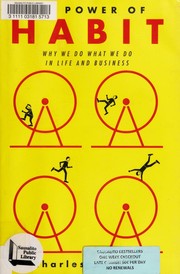
The Power of Habit
Rating: 4.0/5 from 145 Google Books ratings
In The Power of Habit, award-winning business reporter Charles Duhigg takes us to the thrilling edge of scientific discoveries that expla...
Measure What Matters
#1 New York Times Bestseller Legendary venture capitalist John Doerr reveals how the goal-setting system of Objectives and Key Results (O...
eBay marketplace picks
Marketplace Samples
Live-tested eBay searches with available results related to this page.
Selected fromhabit tracker board oneBay.co.uk.


Endnotes
1.
Source: sciencedirect.com
Link:https://www.sciencedirect.com/science/article/pii/0749597887900458
Source snippet
A meta-analytic study of the effects of goal setting on task performance: 1966–1984 - ScienceDirect...
2.
Source: sciencedirect.com
Link:https://www.sciencedirect.com/science/article/abs/pii/S0065260106380021
Source snippet
Implementation Intentions and Goal Achievement: A Meta‐analysis of Effects and Processes - ScienceDirect...
3.
Source: sciencedirect.com
Title: ScienceDirect Goal Setting Theory
Link:https://www.sciencedirect.com/topics/social-sciences/goal-setting-theory
Source snippet
Goal Setting Theory - an overview | ScienceDirect Topics...
4.
Source: sciencedirect.com
Title: ScienceDirect Knowing when to set learning versus performance goals
Link:https://www.sciencedirect.com/science/article/pii/S0090261611000751
Source snippet
Knowing when to set learning versus performance goals - ScienceDirectJanuary 1, 2012...
Published: January 1, 2012
5.
Source: sciencedirect.com
Link:https://www.sciencedirect.com/science/article/pii/S0749597896900023
Source snippet
Goal Setting Effects on Implicit and Explicit Learning of Complex Tasks - ScienceDirect...
6.
Source: sciencedirect.com
Link:https://www.sciencedirect.com/science/article/abs/pii/S002210310600028X
Source snippet
How do implementation intentions promote goal attainment? A test of component processes - ScienceDirect...
7.
Source: sciencedirect.com
Title: ScienceDirect Immoral goals: how goal setting may lead to unethical behavior
Link:https://www.sciencedirect.com/science/article/pii/S2352250X15001633
8.
Source: sciencedirect.com
Link:https://www.sciencedirect.com/science/article/pii/S0749597817304594
9.
Source: sciencedirect.com
Link:https://www.sciencedirect.com/science/article/abs/pii/S0361476X26000263
10.
Source: sciencedirect.com
Link:https://www.sciencedirect.com/org/science/article/pii/S1741040125000330
11.
Source: sciencedirect.com
Link:https://www.sciencedirect.com/science/article/pii/S0191886920306917
12.
Source: sciencedirect.com
Title: The development and use of a contingency model of objective setting
Link:https://www.sciencedirect.com/org/science/article/pii/S0019785817000115
13.
Source: sciencedirect.com
Link:https://www.sciencedirect.com/science/article/pii/S2095254614000118
14.
Source: sciencedirect.com
Link:https://www.sciencedirect.com/science/article/pii/S1877042813052798
15.
Source: sciencedirect.com
Link:https://www.sciencedirect.com/science/article/pii/S0887617701001135
16.
Source: sciencedirect.com
Link:https://www.sciencedirect.com/science/article/abs/pii/0749597887900458
17.
Source: sciencedirect.com
Link:https://www.sciencedirect.com/science/chapter/bookseries/abs/pii/S0065260106380021
18.
Source: sciencedirect.com
Link:https://www.sciencedirect.com/science/article/pii/S0959475214000681
19.
Source: sciencedirect.com
Title: Goal Attainment
Link:https://www.sciencedirect.com/topics/social-sciences/goal-attainment
20.
Source: sciencedirect.com
Link:https://www.sciencedirect.com/science/article/abs/pii/S1747938X25000466
21.
Source: sciencedirect.com
Link:https://www.sciencedirect.com/science/article/pii/S0749597813000423
22.
Source: sciencedirect.com
Title: Challenge versus threat effects on the goal–performance relationship
Link:https://www.sciencedirect.com/science/article/abs/pii/S0749597802000043
23.
Source: sciencedirect.com
Title: Setting Theory
Link:https://www.sciencedirect.com/topics/computer-science/setting-theory
24.
Source: sciencedirect.com
Link:https://www.sciencedirect.com/science/article/pii/0749597887900239
25.
Source: sciencedirect.com
Title: Breaking the Rules: A Historical Overview of Goal-Setting Theory
Link:https://www.sciencedirect.com/science/chapter/bookseries/pii/S221509191500005X
26.
Source: sciencedirect.com
Title: Immoral goals: how goal setting may lead to unethical behavior
Link:https://www.sciencedirect.com/science/article/abs/pii/S2352250X15001633
27.
Source: sciencedirect.com
Link:https://www.sciencedirect.com/science/article/abs/pii/S0749597813000757
28.
Source: sciencedirect.com
Link:https://www.sciencedirect.com/science/article/pii/S0749597813000757
29.
Source: sciencedirect.com
Title: How to motivate yourself and others? Intended and unintended consequences
Link:https://www.sciencedirect.com/science/article/abs/pii/S0191308515000052
30.
Source: sciencedirect.com
Title: Goal Setting Effects on Implicit and Explicit Learning of Complex Tasks
Link:https://www.sciencedirect.com/science/article/abs/pii/S0749597896900023
31.
Source: pubmed.ncbi.nlm.nih.gov
Link:https://pubmed.ncbi.nlm.nih.gov/26479070/
Source snippet
Does monitoring goal progress promote goal attainment? A meta-analysis of the experimental evidence - PubMed...
32.
Source: pubmed.ncbi.nlm.nih.gov
Link:https://pubmed.ncbi.nlm.nih.gov/8201904/
Source snippet
Goal setting and performance in sport and exercise settings: a synthesis and critique - PubMed...
33.
Source: tandfonline.com
Link:https://www.tandfonline.com/doi/full/10.1080/1750984X.2022.2116723
Source snippet
Taylor & Francis OnlineFull article: The performance and psychological effects of goal setting in sport: A systematic review and meta-ana...
34.
Source: hbs.edu
Link:https://www.hbs.edu/ris/download.aspx?name=09-083.pdf
35.
Source: pubmed.ncbi.nlm.nih.gov
Link:https://pubmed.ncbi.nlm.nih.gov/42045506/
36.
Source: pubmed.ncbi.nlm.nih.gov
Link:https://pubmed.ncbi.nlm.nih.gov/41784001/
37.
Source: pubmed.ncbi.nlm.nih.gov
Link:https://pubmed.ncbi.nlm.nih.gov/41441404/
38.
Source: pubmed.ncbi.nlm.nih.gov
Link:https://pubmed.ncbi.nlm.nih.gov/41233533/
39.
Source: pubmed.ncbi.nlm.nih.gov
Link:https://pubmed.ncbi.nlm.nih.gov/40857296/
40.
Source: pubmed.ncbi.nlm.nih.gov
Link:https://pubmed.ncbi.nlm.nih.gov/40701164/
41.
Source: pubmed.ncbi.nlm.nih.gov
Link:https://pubmed.ncbi.nlm.nih.gov/39590901/
42.
Source: pubmed.ncbi.nlm.nih.gov
Link:https://pubmed.ncbi.nlm.nih.gov/38560998/
43.
Source: pubmed.ncbi.nlm.nih.gov
Link:https://pubmed.ncbi.nlm.nih.gov/37883405/
44.
Source: pubmed.ncbi.nlm.nih.gov
Link:https://pubmed.ncbi.nlm.nih.gov/37504476/
45.
Source: pubmed.ncbi.nlm.nih.gov
Link:https://pubmed.ncbi.nlm.nih.gov/36396151/
46.
Source: tandfonline.com
Link:https://www.tandfonline.com/doi/abs/10.1080/1750984X.2022.2116723
47.
Source: pubmed.ncbi.nlm.nih.gov
Link:https://pubmed.ncbi.nlm.nih.gov/35708886/
48.
Source: pubmed.ncbi.nlm.nih.gov
Link:https://pubmed.ncbi.nlm.nih.gov/35572269/
49.
Source: kids.frontiersin.org
Link:https://kids.frontiersin.org/articles/10.3389/frym.2022.684422/full
50.
Source: pubmed.ncbi.nlm.nih.gov
Link:https://pubmed.ncbi.nlm.nih.gov/35171944/
51.
Source: tandfonline.com
Link:https://www.tandfonline.com/doi/full/10.1080/1750984X.2021.1944271
52.
Source: tandfonline.com
Link:https://www.tandfonline.com/doi/full/10.1080/1750984X.2021.1977974
53.
Source: pubmed.ncbi.nlm.nih.gov
Link:https://pubmed.ncbi.nlm.nih.gov/34207799/
54.
Source: pubmed.ncbi.nlm.nih.gov
Link:https://pubmed.ncbi.nlm.nih.gov/34067590/
55.
Source: pubmed.ncbi.nlm.nih.gov
Link:https://pubmed.ncbi.nlm.nih.gov/34054628/
56.
Source: tandfonline.com
Link:https://www.tandfonline.com/doi/full/10.1080/1750984X.2021.1901298
57.
Source: pubmed.ncbi.nlm.nih.gov
Link:https://pubmed.ncbi.nlm.nih.gov/31753742/
58.
Source: pubmed.ncbi.nlm.nih.gov
Link:https://pubmed.ncbi.nlm.nih.gov/31409357/
59.
Source: pubmed.ncbi.nlm.nih.gov
Link:https://pubmed.ncbi.nlm.nih.gov/30425028/
60.
Source: pubmed.ncbi.nlm.nih.gov
Link:https://pubmed.ncbi.nlm.nih.gov/29385950/
61.
Source: pubmed.ncbi.nlm.nih.gov
Link:https://pubmed.ncbi.nlm.nih.gov/31304346/
62.
Source: pubmed.ncbi.nlm.nih.gov
Link:https://pubmed.ncbi.nlm.nih.gov/28392775/
63.
Source: pubmed.ncbi.nlm.nih.gov
Link:https://pubmed.ncbi.nlm.nih.gov/27633956/
64.
Source: pubmed.ncbi.nlm.nih.gov
Link:https://pubmed.ncbi.nlm.nih.gov/27957520/
65.
Source: pubmed.ncbi.nlm.nih.gov
Link:https://pubmed.ncbi.nlm.nih.gov/26922615/
66.
Source: pubmed.ncbi.nlm.nih.gov
Link:https://pubmed.ncbi.nlm.nih.gov/26445201/
67.
Source: pubmed.ncbi.nlm.nih.gov
Link:https://pubmed.ncbi.nlm.nih.gov/25965276/
68.
Source: library.hbs.edu
Title: when goal setting goes bad
Link:https://www.library.hbs.edu/working-knowledge/when-goal-setting-goes-bad
69.
Source: pubmed.ncbi.nlm.nih.gov
Link:https://pubmed.ncbi.nlm.nih.gov/17005500/
70.
Source: pubmed.ncbi.nlm.nih.gov
Link:https://pubmed.ncbi.nlm.nih.gov/27008360/
71.
Source: pubmed.ncbi.nlm.nih.gov
Link:https://pubmed.ncbi.nlm.nih.gov/17295981/
72.
Source: pubmed.ncbi.nlm.nih.gov
Link:https://pubmed.ncbi.nlm.nih.gov/18272806/
73.
Source: pubmed.ncbi.nlm.nih.gov
Link:https://pubmed.ncbi.nlm.nih.gov/12088128/
74.
Source: pubmed.ncbi.nlm.nih.gov
Link:https://pubmed.ncbi.nlm.nih.gov/29189034/
75.
Source: pubmed.ncbi.nlm.nih.gov
Link:https://pubmed.ncbi.nlm.nih.gov/31662031/?dopt=Abstract
76.
Source: pubmed.ncbi.nlm.nih.gov
Link:https://pubmed.ncbi.nlm.nih.gov/10639908/
77.
Source: pubmed.ncbi.nlm.nih.gov
Link:https://pubmed.ncbi.nlm.nih.gov/31973666/
78.
Source: pubmed.ncbi.nlm.nih.gov
Link:https://pubmed.ncbi.nlm.nih.gov/30335463/
79.
Source: pubmed.ncbi.nlm.nih.gov
Link:https://pubmed.ncbi.nlm.nih.gov/33948918/
80.
Source: pubmed.ncbi.nlm.nih.gov
Link:https://pubmed.ncbi.nlm.nih.gov/27670401/
81.
Source: tandfonline.com
Link:https://www.tandfonline.com/toc/rirs20/17/2
Additional References
82.
Source: youtube.com
Title: Process Goals VS Outcome Goals: How to Set Goals You Can Actually Achieve
Link:https://www.youtube.com/watch?v=tfQftLaQQ7Y
Source snippet
Goal Setting Is a Hamster Wheel. Learn to Set Systems Instead. | Adam Alter | Big Think...
83.
Source: youtube.com
Title: How to Set Fitness Goals: Outcome vs. Process Goals
Link:https://www.youtube.com/watch?v=KtTDntqUI-Q
Source snippet
"Outcome goals" "process goals" habits daily behavior How to Set Fitness Goals: Outcome vs. Process Goals...
84.
Source: youtube.com
Link:https://www.youtube.com/watch?v=x44zEK39GOM
Source snippet
The Science of Setting & Achieving Goals...
85.
Source: youtube.com
Title: Jordan B Peterson Clips
Link:https://www.youtube.com/watch?v=Bf9Wen-j5Zw
Source snippet
Goal Setting Is a Hamster Wheel. Learn to Set Systems Instead. | Adam Alter | Big Think Big Think...
86.
Source: researchgate.net
Link:https://www.researchgate.net/publication/363251445_The_performance_and_psychological_effects_of_goal_setting_in_sport_A_systematic_review_and_meta-analysis
87.
Source: researchgate.net
Link:https://www.researchgate.net/publication/369269079_The_what_why_and_how_of_goal_setting_A_review_of_the_goal-setting_process_in_applied_sport_psychology_practice
88.
Source: frontiersin.org
Link:https://www.frontiersin.org/journals/psychology/articles/10.3389/fpsyg.2022.795117/full
89.
Source: youtube.com
Title: Process Goals VS Outcome Goals
Link:https://www.youtube.com/watch?v=V3JW6We87d0
Source snippet
How to Set Fitness Goals: Outcome vs. Process Goals...
90.
Source: apa.org
Title: Frequently monitoring progress toward goals increases chance of success
Link:https://www.apa.org/news/press/releases/2015/10/progress-goals
91.
Source: researchgate.net
Title: 232586681 Goal setting and task performance 1969 1980
Link:https://www.researchgate.net/publication/232586681_Goal_setting_and_task_performance