Within Better Habits
Protect Sleep Before Adding More Productivity Tricks
Sleep protects the attention and energy needed to carry out almost every other self-improvement plan.
On this page
- Why sleep affects behavioural capacity
- What restricted sleep does to attention
- Building improvement plans around adequate rest
Page outline Jump by section
Introduction
Sleep is not merely another item on a self-improvement checklist. It is part of the operating capacity that makes the rest of the checklist possible. Plans to study, exercise, resist distractions, prepare meals or finish difficult work all depend on being able to maintain attention, notice mistakes and keep exerting effort when the task stops being rewarding. Restricted sleep weakens those capacities, particularly sustained attention, and repeated short nights can produce deficits that accumulate even when a person no longer feels dramatically sleepier.[PubMed Central (PMC)]pmc.ncbi.nlm.nih.govPubMed Central (PMC)Sleep deprivation, vigilant attention, and brain function: a review - PMCJune 8, 2019…
That makes sleep a useful priority rule for self-improvement: before adding another productivity technique, ask whether the plan is being built on adequate rest. For most healthy adults, expert guidance recommends at least seven hours of sleep regularly, while the NHS describes seven to nine hours as the average adult requirement. Individual need varies, but routinely cutting sleep to create more “productive” waking time can be self-defeating if the extra hours come with poorer attention and less reliable follow-through.[AASM]aasm.orgRecommended Amount of Sleep for a Healthy Adult: A Joint Consensus Statement of the American Academy of Sleep Medicine and Sleep Rese…
Why sleep affects behavioural capacity
Much self-improvement advice assumes that the main obstacle is deciding what to do. In practice, knowing the right action and reliably carrying it out are different problems. Execution requires sustained attention: the ability to remain engaged long enough to notice the relevant cue, keep the goal active and respond before attention drifts elsewhere.
Sleep loss is unusually disruptive to this form of attention. Research commonly measures it with the psychomotor vigilance test, or PVT, a simple task in which people respond to unpredictable visual signals. Sleep-deprived participants do not necessarily become uniformly slow. Instead, performance becomes unstable: many responses remain normal, but they are increasingly interrupted by unusually slow responses and outright lapses. This pattern helps explain why tired people may feel capable for stretches of time yet still make consequential errors.[PubMed Central (PMC)]pmc.ncbi.nlm.nih.govPubMed Central (PMC)Sleep deprivation, vigilant attention, and brain function: a review - PMCJune 8, 2019…
For ordinary self-improvement, those brief lapses matter. A study session can be undermined by repeatedly losing the thread. A planned workout can fail at the transition between finishing work and getting changed. Administrative work can take longer because small mistakes require correction. The practical problem is therefore not simply “feeling tired”. It is that behaviour becomes less consistently governed by the goal from moment to moment.
Sleep may also affect how willing people are to keep investing effort. A review of sleep deprivation and effort allocation found that sleep loss can make cognitive performance feel more effortful and reduce willingness to expend effort in pursuit of a goal. Strong incentives can sometimes produce compensatory effort, but compensation is incomplete and itself costly.[PubMed]pubmed.ncbi.nlm.nih.govPub Med Sleep deprivation, effort allocation and performanceSleep deprivation, effort allocation and performance - PubMedApril 3, 2019… This helps explain a familiar self-improvement failure pattern: a demanding plan that seems reasonable when rested can feel disproportionately difficult after several short nights.
There is also evidence linking sleep with self-control. A systematic review and meta-analysis covering experimental and observational research found an overall relationship between sleep and self-control, although the literature varies by how sleep and self-control are measured.[PubMed]pubmed.ncbi.nlm.nih.govPub Med Sleep and self-control: A systematic review and meta-analysisPub Med Sleep and self-control: A systematic review and meta-analysis One laboratory study went further, finding that a night without sleep shifted participants towards more habitual responding and away from goal-directed control in an instrumental-learning task.[PubMed]pubmed.ncbi.nlm.nih.govOpen source on nih.gov. That result should not be inflated into a claim that tired people automatically “lose discipline”, but it fits a broader principle: when cognitive capacity is constrained, relying on deliberate control becomes less dependable.
What restricted sleep does to attention
The strongest practical evidence is not based on extreme all-nighters alone. Controlled studies show that modest but repeated sleep restriction can accumulate into meaningful impairment.
In a landmark laboratory experiment, healthy adults were assigned to four, six or eight hours of time in bed each night for 14 days. Performance on attention and other cognitive tasks deteriorated progressively in the four- and six-hour groups, whereas the eight-hour group remained comparatively stable. By the end of the experiment, the cognitive deficits produced by repeated six-hour nights were comparable on some measures to those seen after roughly one full night without sleep.[PubMed]pubmed.ncbi.nlm.nih.govThe cumulative cost of additional wakefulness: dose-response effects on neurobehavioral functions and sleep physiology from chronic…
The especially important finding was that participants did not fully perceive this deterioration. Their objective performance continued to worsen across the restricted-sleep period, while subjective sleepiness rose initially and then changed much less. People appeared to become accustomed to how sleepy they felt without becoming equivalently adapted in performance.[PubMed Central (PMC)]pmc.ncbi.nlm.nih.govOpen source on nih.gov.
That mismatch is a problem for anyone using “I feel fine” as the test of whether sleep is sufficient. Separate controlled work has likewise found that subjective alertness can underestimate objective impairment under sleep restriction, particularly during the biological night.[PubMed]pubmed.ncbi.nlm.nih.govOpen source on nih.gov. Another inpatient experiment found that chronic short sleep increased reaction-time impairment and attention lapses even when researchers prevented unusually long bouts of continuous wakefulness, strengthening the case that restricted sleep itself — not only marathon waking periods — degrades vigilance.[PubMed]pubmed.ncbi.nlm.nih.govOpen source on nih.gov.
Attention is affected more consistently than every other ability
The evidence does not support the exaggerated claim that one bad night uniformly damages every aspect of cognition. In a 2024 systematic review and meta-analysis of 44 studies, restricting sleep to two to six hours for one night clearly increased sleepiness and impaired sustained attention: reaction times became slower and attentional lapses increased. Yet the same analysis did not detect significant overall effects on working memory, inhibitory control, choice reaction time or several other outcomes.[PubMed]pubmed.ncbi.nlm.nih.govOpen source on nih.gov.
Individual experiments sometimes find little change in particular executive tasks after modest restriction. For example, one study of healthy young adults found no significant impairment on tests of response inhibition, selective attention or decision-making after a single partial night of sleep restriction.[PubMed]pubmed.ncbi.nlm.nih.govOpen source on nih.gov. Another randomised trial in which participants lost approximately one hour of sleep nightly for six nights found an effect on working-memory capacity but not its tests of sustained attention, inhibition or decision-making.[PubMed]pubmed.ncbi.nlm.nih.govOpen source on nih.gov.
These apparent inconsistencies are useful rather than inconvenient. “Cognition” is not one thing, and different tasks vary in difficulty, sensitivity and the amount of compensatory effort people can bring to them. Across broader bodies of research, sustained attention emerges as one of the most reliable vulnerabilities. A meta-analysis of 61 sleep-restriction studies found overall impairment in neurocognitive functioning, including executive functioning and sustained attention, while effects differed across domains and study conditions.[PubMed]pubmed.ncbi.nlm.nih.govOpen source on nih.gov.
For self-improvement, that distinction matters. The most defensible claim is not that insufficient sleep makes a person temporarily incapable of rational thought. It is that it makes dependable performance harder, especially when the task is repetitive, prolonged, unstimulating or requires attention to remain stable over time. Those are exactly the conditions in which many worthwhile routines — studying, writing, practice, paperwork and exercise preparation — must survive.
The cost can build before it feels serious
Repeated short sleep deserves particular attention because it resembles ordinary life more closely than laboratory all-nighters. The impairment can accumulate gradually, while subjective awareness lags behind it. That creates a misleading behavioural feedback loop: a person stays up late to gain another hour for work, feels broadly functional the next day and concludes that the strategy is sustainable. The extra waking time is obvious; the increase in missed details, slower starts and variable concentration is much harder to notice.
This is not a small population issue. In the United States, the National Center for Health Statistics reported in 2026 that 30.5% of adults surveyed in 2024 averaged less than seven hours of sleep in a 24-hour period.[CDC]cdc.govOpen source on cdc.gov. Prevalence varies by population and country, but short sleep is common enough that many self-improvement plans are being attempted under conditions that may already reduce the capacity needed to execute them.
Build improvement plans around adequate rest
The practical implication is not that every routine should be abandoned after a poor night. It is that sleep should be treated as a constraint when designing the routine, rather than as disposable time left over after everything else has been scheduled.
Protect adequate sleep before borrowing time from it. For healthy adults, a reasonable evidence-based starting point is to preserve at least seven hours regularly, recognising that many people require more.[AASM]aasm.orgRecommended Amount of Sleep for a Healthy Adult: A Joint Consensus Statement of the American Academy of Sleep Medicine and Sleep Rese… If a new study, exercise or work routine only fits by repeatedly cutting sleep to five or six hours, the schedule itself is probably the first thing to redesign.
Judge a plan across several days, not by one energetic morning. Chronic restriction can accumulate while subjective sleepiness changes relatively little.[PubMed]pubmed.ncbi.nlm.nih.govThe cumulative cost of additional wakefulness: dose-response effects on neurobehavioral functions and sleep physiology from chronic… When evaluating whether a demanding routine is sustainable, look for behavioural evidence: more rereading, missed appointments, abandoned evening tasks, unusually long start-up times, simple errors or repeated reliance on stimulants merely to reach normal functioning. Feeling “used to” short sleep is not proof that performance has adapted.
Put high-attention work where rested capacity is most likely. Sleep pressure and circadian timing interact, so performance varies not only with how much sleep a person has obtained but also with time awake and biological time of day.[PubMed Central (PMC)]pmc.ncbi.nlm.nih.govPubMed Central (PMC)Sleep deprivation, vigilant attention, and brain function: a review - PMCJune 8, 2019… Personal schedules differ, but the general design principle is straightforward: do not unnecessarily place the most attention-sensitive behaviour at the point where sleep pressure is highest.
Reduce the amount of deliberate control required on poor-sleep days. Because sleep loss can make sustained effort and goal-directed control less reliable, simple environmental supports become more valuable, not less.[PubMed]pubmed.ncbi.nlm.nih.govPub Med Sleep deprivation, effort allocation and performanceSleep deprivation, effort allocation and performance - PubMedApril 3, 2019… Preparing exercise clothes in advance, deciding tomorrow’s first work task before finishing today or removing obvious distractions can protect follow-through when attention is less stable. These measures do not replace sleep; they reduce the behavioural load imposed on an already constrained system.
Do not treat occasional sleep extension as a licence for chronic restriction. There is evidence that extending sleep can improve sustained attention. In one controlled study, six nights of extended sleep improved PVT performance and reduced subsequent attention lapses during total sleep deprivation.[PubMed]pubmed.ncbi.nlm.nih.govOpen source on nih.gov. A newer systematic review similarly found generally positive effects of sleep extension on sustained attention and reaction time, but concluded that the benefits were limited and did not justify treating extension as a complete remedy for accumulated sleep debt.[PubMed]pubmed.ncbi.nlm.nih.govOpen source on nih.gov. More broadly, a meta-analysis found that behavioural interventions can successfully increase sleep duration, with interventions that directly changed the sleep schedule tending to outperform education alone.[PubMed]pubmed.ncbi.nlm.nih.govOpen source on nih.gov.
That last point fits the wider logic of self-improvement that works. Information by itself is often weaker than changing the conditions under which behaviour happens. “Sleep more” is an intention. A protected bedtime, realistic evening workload and enough scheduled time in bed turn that intention into a system.
Protect sleep before adding more productivity tricks
Productivity techniques can help people direct their capacity; they cannot manufacture unlimited capacity. Implementation intentions, environmental cues, habit-building and progress monitoring remain useful, but their reliability depends partly on whether the person applying them can sustain attention and effort when the planned moment arrives.
Sleep therefore belongs near the base of a workable self-improvement system. The evidence is strongest for a simple conclusion: inadequate sleep, especially when repeated, increases lapses and instability in attention, can make effort feel more costly and may weaken some forms of deliberate behavioural control. At the same time, people can underestimate the extent of their own impairment.[nih.gov]pmc.ncbi.nlm.nih.govPubMed Central (PMC)Sleep deprivation, vigilant attention, and brain function: a review - PMCJune 8, 2019…
The practical standard is not perfect sleep every night. It is to stop designing improvement plans that depend on chronic sleep sacrifice. When a routine repeatedly fails under short sleep, the next intervention should not automatically be a stricter timetable, a more elaborate app or another motivational technique. Sometimes the most effective productivity adjustment is simply to restore the attention and energy that the plan assumed were available in the first place.
Amazon book picks
Further Reading
Books and field guides related to Protect Sleep Before Adding More Productivity Tricks. Use these as the next step if you want deeper reading beyond the article.
Why We Sleep
"Sleep is one of the most important but least understood aspects of our life, wellness, and longevity ... An explosion of scientific disc...
The Sleep Solution
With cutting-edge sleep science and time-tested techniques, The Sleep Solution will help anyone achieve healthy sleep and eliminate pills...
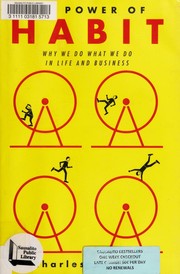
The Power of Habit
Rating: 4.0/5 from 145 Google Books ratings
In The Power of Habit, award-winning business reporter Charles Duhigg takes us to the thrilling edge of scientific discoveries that expla...
Sleep Smarter
Shawn Stevenson is a health expert with a background in biology and kinesiology who has helped thousands of people worldwide to improve t...
eBay marketplace picks
Marketplace Samples
Live-tested eBay searches with available results related to this page.
Selected fromsleep accessories oneBay.co.uk.

Endnotes
1.
Source: aasm.org
Link:https://www.aasm.org/resources/pdf/adultsleepdurationconsensus.pdf
Source snippet
Recommended Amount of Sleep for a Healthy Adult: A Joint Consensus Statement of the American Academy of Sleep Medicine and Sleep Rese...
2.
Source: nhs.uk
Link:https://www.nhs.uk/conditions/insomnia/
3.
Source: cdc.gov
Link:https://www.cdc.gov/nchs/products/databriefs/db559.htm
4.
Source: nhs.uk
Title: www.nhs.uk How to be happier
Link:https://www.nhs.uk/mental-health/self-help/tips-and-support/how-to-be-happier/
5.
Source: aasm.org
Link:https://aasm.org/about/newsroom/
6.
Source: aasm.org
Title: Americans are ‘doomscrolling’ at bedtime, prioritizing screen time over sleep
Link:https://aasm.org/americans-are-doomscrolling-at-bedtime-prioritizing-screen-time-over-sleep/
7.
Source: aasm.org
Title: consensus statements and papers
Link:https://aasm.org/clinical-resources/practice-standards/consensus-statements-and-papers/
8.
Source: cdc.gov
Title: adults sleep facts and stats
Link:https://www.cdc.gov/sleep/data-research/facts-stats/adults-sleep-facts-and-stats.html
9.
Source: cdc.gov
Link:https://www.cdc.gov/sleep/about/index.html?linkId=821098919
10.
Source: cdc.gov
Title: sleep and heart health
Link:https://www.cdc.gov/heart-disease/about/sleep-and-heart-health.html
11.
Source: cdc.gov
Link:https://www.cdc.gov/mmwr/volumes/73/wr/mm7316a6.htm
12.
Source: rbht.nhs.uk
Title: Top tips for a good night’s sleep | Royal Brompton & Harefield hospitals
Link:https://www.rbht.nhs.uk/blog/top-tips-for-good-nights-sleep
13.
Source: nhs.uk
Title: www.nhs.uk Sleep paralysis
Link:https://www.nhs.uk/conditions/sleep-paralysis/
14.
Source: plymouthhospitals.nhs.uk
Link:https://www.plymouthhospitals.nhs.uk/display-pil/pil-sleep-advice-5509
15.
Source: cdc.gov
Link:https://www.cdc.gov/mmwr/volumes/71/wr/mm7110a6.htm
16.
Source: nhs.uk
Title: www.nhs.uk Sleep problems
Link:https://www.nhs.uk/every-mind-matters/mental-health-issues/sleep/?ac=227391
17.
Source: cdc.gov
Link:https://www.cdc.gov/niosh/bulletin/2020/sleep.html
18.
Source: cdc.gov
Link:https://www.cdc.gov/niosh/work-hour-training-for-nurses/longhours/mod2/08.html
19.
Source: cdc.gov
Link:https://www.cdc.gov/niosh/work-hour-training-for-nurses/longhours/mod6/01.html
20.
Source: aasm.org
Title: Adult Sleep Duration Health Advisory
Link:https://aasm.org/advocacy/position-statements/adult-sleep-duration-health-advisory/
21.
Source: aasm.org
Link:https://aasm.org/clinical-resources/practice-standards/consensus-statements-and-papers/attachment/adultsleepdurationconsensus-2/
22.
Source: aasm.org
Link:https://aasm.org/clinical-resources/practice-standards/practice-guidelines/attachment/adultsleepdurationconsensus/
23.
Source: cdc.gov
Link:https://www.cdc.gov/mmwr/volumes/65/wr/mm6506a1.htm
24.
Source: aasm.org
Title: Sleep duration consensus statement receives national media coverage
Link:https://aasm.org/sleep-duration-consensus-statement-receives-national-media-coverage/
25.
Source: aasm.org
Title: AAS M and SRS publish new sleep duration consensus statement
Link:https://aasm.org/aasm-and-srs-publish-new-sleep-duration-consensus-statement/
26.
Source: aasm.org
Title: Seven or more hours of sleep per night: A health necessity for adults
Link:https://aasm.org/seven-or-more-hours-of-sleep-per-night-a-health-necessity-for-adults
27.
Source: cdc.gov
Title: Preventing Chronic Disease | Raising Awareness of Sleep as a Healthy Behavior
Link:https://www.cdc.gov/pcd/issues/2013/13_0081.htm
28.
Source: cdc.gov
Link:https://www.cdc.gov/mmwr/preview/mmwrhtml/mm6008a3.htm
29.
Source: aasm.org
Link:https://aasm.org/sleep-extension-improves-alertness-and-performance-during-and-following-subsequent-sleep-restriction/
30.
Source: aasm.org
Link:https://aasm.org/journal-sleep-sleep-duration-related-to-having-the-metabolic-syndrome-a-strong-risk-factor-for-cardiovascular-disease/
31.
Source: aasm.org
Title: Journal SLEEP: Short, Long Sleep Duration Associated with Increased Mortality
Link:https://aasm.org/journal-sleep-short-long-sleep-duration-associated-with-increased-mortality/
32.
Source: keepingwellnwl.nhs.uk
Link:https://www.keepingwellnwl.nhs.uk/self-help-resources/common-problems/managing-sleep
33.
Source: slam.nhs.uk
Link:https://slam.nhs.uk/insomnia
34.
Source: northumbria.nhs.uk
Link:https://www.northumbria.nhs.uk/our-services/your-health-and-wellbeing/sleep
35.
Source: swlondon-healthiertogether.nhs.uk
Link:https://www.swlondon-healthiertogether.nhs.uk/healthier-me/prehabilitation/waiting-well-preparing-yourself-surgery/sleeping-better
36.
Source: myhealthlondon.nhs.uk
Link:https://www.myhealthlondon.nhs.uk/be-healthier/sleep-better/how-sleep-affects-your-heart/
37.
Source: selfhelp.cntw.nhs.uk
Link:https://selfhelp.cntw.nhs.uk/self-help-guides/sleeping-problems/print/529
38.
Source: pmc.ncbi.nlm.nih.gov
Link:https://pmc.ncbi.nlm.nih.gov/articles/PMC6879580/
Source snippet
PubMed Central (PMC)Sleep deprivation, vigilant attention, and brain function: a review - PMCJune 8, 2019...
Published: June 8, 2019
39.
Source: pubmed.ncbi.nlm.nih.gov
Link:https://pubmed.ncbi.nlm.nih.gov/12683469/
Source snippet
The cumulative cost of additional wakefulness: dose-response effects on neurobehavioral functions and sleep physiology from chronic...
40.
Source: pmc.ncbi.nlm.nih.gov
Title: Pub Med Central (PMC)The sleep-deprived human brain
Link:https://pmc.ncbi.nlm.nih.gov/articles/PMC6143346/
Source snippet
PubMed Central (PMC)The sleep-deprived human brain - PMC...
41.
Source: pubmed.ncbi.nlm.nih.gov
Title: Pub Med Sleep deprivation, effort allocation and performance
Link:https://pubmed.ncbi.nlm.nih.gov/31072557/
Source snippet
Sleep deprivation, effort allocation and performance - PubMedApril 3, 2019...
Published: April 3, 2019
42.
Source: pubmed.ncbi.nlm.nih.gov
Title: Pub Med The effects of sleep loss on capacity and effort
Link:https://pubmed.ncbi.nlm.nih.gov/26483932/
Source snippet
The effects of sleep loss on capacity and effort - PubMed...
43.
Source: pubmed.ncbi.nlm.nih.gov
Title: Pub Med Sleep and self-control: A systematic review and meta-analysis
Link:https://pubmed.ncbi.nlm.nih.gov/34157493/
44.
Source: pubmed.ncbi.nlm.nih.gov
Link:https://pubmed.ncbi.nlm.nih.gov/29109237/
45.
Source: pmc.ncbi.nlm.nih.gov
Title: Pub Med Central (PMC)Neurocognitive Consequences of Sleep Deprivation
Link:https://pmc.ncbi.nlm.nih.gov/articles/PMC3564638/
46.
Source: pmc.ncbi.nlm.nih.gov
Link:https://pmc.ncbi.nlm.nih.gov/articles/PMC1978335/
47.
Source: pubmed.ncbi.nlm.nih.gov
Title: Pub Med Behavioral and physiological consequences of sleep restriction
Link:https://pubmed.ncbi.nlm.nih.gov/17803017/
48.
Source: pubmed.ncbi.nlm.nih.gov
Link:https://pubmed.ncbi.nlm.nih.gov/21564364/
49.
Source: pubmed.ncbi.nlm.nih.gov
Link:https://pubmed.ncbi.nlm.nih.gov/29784810/
50.
Source: pubmed.ncbi.nlm.nih.gov
Link:https://pubmed.ncbi.nlm.nih.gov/38759474/
51.
Source: pubmed.ncbi.nlm.nih.gov
Link:https://pubmed.ncbi.nlm.nih.gov/30455847/
52.
Source: pubmed.ncbi.nlm.nih.gov
Link:https://pubmed.ncbi.nlm.nih.gov/30670158/
53.
Source: pubmed.ncbi.nlm.nih.gov
Link:https://pubmed.ncbi.nlm.nih.gov/28757454/
54.
Source: pubmed.ncbi.nlm.nih.gov
Link:https://pubmed.ncbi.nlm.nih.gov/20681233/
55.
Source: pubmed.ncbi.nlm.nih.gov
Link:https://pubmed.ncbi.nlm.nih.gov/26194565/
56.
Source: pubmed.ncbi.nlm.nih.gov
Link:https://pubmed.ncbi.nlm.nih.gov/40984126/
57.
Source: pubmed.ncbi.nlm.nih.gov
Link:https://pubmed.ncbi.nlm.nih.gov/34507028/
58.
Source: pubmed.ncbi.nlm.nih.gov
Link:https://pubmed.ncbi.nlm.nih.gov/42443952/
59.
Source: pubmed.ncbi.nlm.nih.gov
Link:https://pubmed.ncbi.nlm.nih.gov/41859330/
60.
Source: pubmed.ncbi.nlm.nih.gov
Link:https://pubmed.ncbi.nlm.nih.gov/41206488/
61.
Source: pubmed.ncbi.nlm.nih.gov
Link:https://pubmed.ncbi.nlm.nih.gov/40719384/
62.
Source: pmc.ncbi.nlm.nih.gov
Link:https://pmc.ncbi.nlm.nih.gov/articles/PMC12910618/
63.
Source: pubmed.ncbi.nlm.nih.gov
Link:https://pubmed.ncbi.nlm.nih.gov/41716901/
64.
Source: pubmed.ncbi.nlm.nih.gov
Link:https://pubmed.ncbi.nlm.nih.gov/41768370/
65.
Source: pubmed.ncbi.nlm.nih.gov
Link:https://pubmed.ncbi.nlm.nih.gov/40946426/
66.
Source: pubmed.ncbi.nlm.nih.gov
Link:https://pubmed.ncbi.nlm.nih.gov/40505175/
67.
Source: pubmed.ncbi.nlm.nih.gov
Link:https://pubmed.ncbi.nlm.nih.gov/39955263/
68.
Source: pubmed.ncbi.nlm.nih.gov
Link:https://pubmed.ncbi.nlm.nih.gov/39818483/
69.
Source: pubmed.ncbi.nlm.nih.gov
Link:https://pubmed.ncbi.nlm.nih.gov/39700763/
71.
Source: pubmed.ncbi.nlm.nih.gov
Link:https://pubmed.ncbi.nlm.nih.gov/39427809/
72.
Source: pubmed.ncbi.nlm.nih.gov
Link:https://pubmed.ncbi.nlm.nih.gov/39305567/
73.
Source: pubmed.ncbi.nlm.nih.gov
Link:https://pubmed.ncbi.nlm.nih.gov/38759474/?format=pubmed
74.
Source: pubmed.ncbi.nlm.nih.gov
Link:https://pubmed.ncbi.nlm.nih.gov/41424511/
75.
Source: pubmed.ncbi.nlm.nih.gov
Link:https://pubmed.ncbi.nlm.nih.gov/38233280/
76.
Source: pubmed.ncbi.nlm.nih.gov
Link:https://pubmed.ncbi.nlm.nih.gov/40800414/
77.
Source: pubmed.ncbi.nlm.nih.gov
Link:https://pubmed.ncbi.nlm.nih.gov/37462808/
78.
Source: pubmed.ncbi.nlm.nih.gov
Link:https://pubmed.ncbi.nlm.nih.gov/36082967/
79.
Source: pubmed.ncbi.nlm.nih.gov
Link:https://pubmed.ncbi.nlm.nih.gov/38469285/
80.
Source: pubmed.ncbi.nlm.nih.gov
Link:https://pubmed.ncbi.nlm.nih.gov/36370516/
81.
Source: pubmed.ncbi.nlm.nih.gov
Link:https://pubmed.ncbi.nlm.nih.gov/36329599/
82.
Source: pmc.ncbi.nlm.nih.gov
Link:https://pmc.ncbi.nlm.nih.gov/articles/PMC9238330/
83.
Source: pubmed.ncbi.nlm.nih.gov
Link:https://pubmed.ncbi.nlm.nih.gov/35358742/
84.
Source: pubmed.ncbi.nlm.nih.gov
Link:https://pubmed.ncbi.nlm.nih.gov/35321359/
85.
Source: pubmed.ncbi.nlm.nih.gov
Link:https://pubmed.ncbi.nlm.nih.gov/35266244/
86.
Source: pubmed.ncbi.nlm.nih.gov
Link:https://pubmed.ncbi.nlm.nih.gov/34280324/
87.
Source: pubmed.ncbi.nlm.nih.gov
Link:https://pubmed.ncbi.nlm.nih.gov/33593153/
88.
Source: pubmed.ncbi.nlm.nih.gov
Link:https://pubmed.ncbi.nlm.nih.gov/33438751/
89.
Source: pubmed.ncbi.nlm.nih.gov
Link:https://pubmed.ncbi.nlm.nih.gov/33571888/
90.
Source: pubmed.ncbi.nlm.nih.gov
Link:https://pubmed.ncbi.nlm.nih.gov/33341402/
91.
Source: pubmed.ncbi.nlm.nih.gov
Link:https://pubmed.ncbi.nlm.nih.gov/31837359/
92.
Source: pubmed.ncbi.nlm.nih.gov
Link:https://pubmed.ncbi.nlm.nih.gov/31250888/
93.
Source: pubmed.ncbi.nlm.nih.gov
Link:https://pubmed.ncbi.nlm.nih.gov/31275098/
94.
Source: pubmed.ncbi.nlm.nih.gov
Link:https://pubmed.ncbi.nlm.nih.gov/30722039/
95.
Source: pubmed.ncbi.nlm.nih.gov
Link:https://pubmed.ncbi.nlm.nih.gov/31031179/
96.
Source: pubmed.ncbi.nlm.nih.gov
Link:https://pubmed.ncbi.nlm.nih.gov/31072564/
97.
Source: pubmed.ncbi.nlm.nih.gov
Link:https://pubmed.ncbi.nlm.nih.gov/30425658/
98.
Source: pmc.ncbi.nlm.nih.gov
Link:https://pmc.ncbi.nlm.nih.gov/articles/PMC6077699/
99.
Source: pubmed.ncbi.nlm.nih.gov
Link:https://pubmed.ncbi.nlm.nih.gov/30006887/
100.
Source: pmc.ncbi.nlm.nih.gov
Link:https://pmc.ncbi.nlm.nih.gov/articles/PMC6003377/
101.
Source: pubmed.ncbi.nlm.nih.gov
Link:https://pubmed.ncbi.nlm.nih.gov/29244170/
102.
Source: pubmed.ncbi.nlm.nih.gov
Link:https://pubmed.ncbi.nlm.nih.gov/29397329/
103.
Source: pubmed.ncbi.nlm.nih.gov
Link:https://pubmed.ncbi.nlm.nih.gov/28803119/
104.
Source: pubmed.ncbi.nlm.nih.gov
Link:https://pubmed.ncbi.nlm.nih.gov/28726307/
105.
Source: pubmed.ncbi.nlm.nih.gov
Link:https://pubmed.ncbi.nlm.nih.gov/28364449/
106.
Source: pubmed.ncbi.nlm.nih.gov
Link:https://pubmed.ncbi.nlm.nih.gov/27586134/
107.
Source: pubmed.ncbi.nlm.nih.gov
Link:https://pubmed.ncbi.nlm.nih.gov/27015382/
108.
Source: pubmed.ncbi.nlm.nih.gov
Link:https://pubmed.ncbi.nlm.nih.gov/27242464/
109.
Source: pubmed.ncbi.nlm.nih.gov
Link:https://pubmed.ncbi.nlm.nih.gov/26921151/
110.
Source: pmc.ncbi.nlm.nih.gov
Link:https://pmc.ncbi.nlm.nih.gov/articles/PMC4355891/
111.
Source: pubmed.ncbi.nlm.nih.gov
Link:https://pubmed.ncbi.nlm.nih.gov/25850114/
112.
Source: pubmed.ncbi.nlm.nih.gov
Link:https://pubmed.ncbi.nlm.nih.gov/25409102/
113.
Source: pmc.ncbi.nlm.nih.gov
Link:https://pmc.ncbi.nlm.nih.gov/articles/PMC4196058/
114.
Source: pubmed.ncbi.nlm.nih.gov
Link:https://pubmed.ncbi.nlm.nih.gov/24891081/
115.
Source: pubmed.ncbi.nlm.nih.gov
Link:https://pubmed.ncbi.nlm.nih.gov/24602612/
116.
Source: pubmed.ncbi.nlm.nih.gov
Link:https://pubmed.ncbi.nlm.nih.gov/23941878/
117.
Source: pubmed.ncbi.nlm.nih.gov
Link:https://pubmed.ncbi.nlm.nih.gov/23029352/
118.
Source: pmc.ncbi.nlm.nih.gov
Link:https://pmc.ncbi.nlm.nih.gov/articles/PMC3621793/
119.
Source: pubmed.ncbi.nlm.nih.gov
Link:https://pubmed.ncbi.nlm.nih.gov/22754046/
120.
Source: pubmed.ncbi.nlm.nih.gov
Link:https://pubmed.ncbi.nlm.nih.gov/22545685/
121.
Source: pmc.ncbi.nlm.nih.gov
Link:https://pmc.ncbi.nlm.nih.gov/articles/PMC3079937/
122.
Source: pmc.ncbi.nlm.nih.gov
Link:https://pmc.ncbi.nlm.nih.gov/articles/PMC2888649/
123.
Source: pubmed.ncbi.nlm.nih.gov
Link:https://pubmed.ncbi.nlm.nih.gov/20565167/
124.
Source: pmc.ncbi.nlm.nih.gov
Link:https://pmc.ncbi.nlm.nih.gov/articles/PMC3290659/
125.
Source: pmc.ncbi.nlm.nih.gov
Link:https://pmc.ncbi.nlm.nih.gov/articles/PMC5831725/
126.
Source: pubmed.ncbi.nlm.nih.gov
Link:https://pubmed.ncbi.nlm.nih.gov/26271496/
127.
Source: pmc.ncbi.nlm.nih.gov
Link:https://pmc.ncbi.nlm.nih.gov/articles/PMC2892834/
128.
Source: pmc.ncbi.nlm.nih.gov
Link:https://pmc.ncbi.nlm.nih.gov/articles/PMC2753816/
129.
Source: pubmed.ncbi.nlm.nih.gov
Link:https://pubmed.ncbi.nlm.nih.gov/19021851/
130.
Source: pubmed.ncbi.nlm.nih.gov
Link:https://pubmed.ncbi.nlm.nih.gov/12941057/
131.
Source: pubmed.ncbi.nlm.nih.gov
Link:https://pubmed.ncbi.nlm.nih.gov/8776790/
132.
Source: pmc.ncbi.nlm.nih.gov
Link:https://pmc.ncbi.nlm.nih.gov/articles/PMC2656292/
133.
Source: pubmed.ncbi.nlm.nih.gov
Link:https://pubmed.ncbi.nlm.nih.gov/20438143/
134.
Source: pmc.ncbi.nlm.nih.gov
Link:https://pmc.ncbi.nlm.nih.gov/articles/PMC3700596/
135.
Source: pubmed.ncbi.nlm.nih.gov
Link:https://pubmed.ncbi.nlm.nih.gov/22877676/
136.
Source: pubmed.ncbi.nlm.nih.gov
Link:https://pubmed.ncbi.nlm.nih.gov/29035066/
137.
Source: pubmed.ncbi.nlm.nih.gov
Link:https://pubmed.ncbi.nlm.nih.gov/9586848/
138.
Source: pubmed.ncbi.nlm.nih.gov
Link:https://pubmed.ncbi.nlm.nih.gov/8570792/
139.
Source: pubmed.ncbi.nlm.nih.gov
Link:https://pubmed.ncbi.nlm.nih.gov/14592216/
140.
Source: pubmed.ncbi.nlm.nih.gov
Link:https://pubmed.ncbi.nlm.nih.gov/21564364/?dopt=Abstract
141.
Source: pubmed.ncbi.nlm.nih.gov
Link:https://pubmed.ncbi.nlm.nih.gov/11014055/
142.
Source: pubmed.ncbi.nlm.nih.gov
Link:https://pubmed.ncbi.nlm.nih.gov/15560765/
143.
Source: pubmed.ncbi.nlm.nih.gov
Link:https://pubmed.ncbi.nlm.nih.gov/26151610/
144.
Source: pubmed.ncbi.nlm.nih.gov
Link:https://pubmed.ncbi.nlm.nih.gov/17284888/
145.
Source: pubmed.ncbi.nlm.nih.gov
Link:https://pubmed.ncbi.nlm.nih.gov/21075236/
146.
Source: pubmed.ncbi.nlm.nih.gov
Link:https://pubmed.ncbi.nlm.nih.gov/31246714/
147.
Source: pubmed.ncbi.nlm.nih.gov
Link:https://pubmed.ncbi.nlm.nih.gov/19294951/
148.
Source: pubmed.ncbi.nlm.nih.gov
Link:https://pubmed.ncbi.nlm.nih.gov/15341888/
149.
Source: pubmed.ncbi.nlm.nih.gov
Link:https://pubmed.ncbi.nlm.nih.gov/24304805/
150.
Source: pubmed.ncbi.nlm.nih.gov
Link:https://pubmed.ncbi.nlm.nih.gov/16676776/
Additional References
151.
Source: youtube.com
Title: Why Sleep Matters | Matthew Walker | Talks at Google
Link:https://www.youtube.com/watch?v=c1yGw_hfEfk
Source snippet
Sleep Deprivation, Impulsivity, and the Prefrontal Cortex | Dr. Matthew Walker...
152.
Source: youtube.com
Title: Discovering Hope in Science: Episode 4 Featuring Dr. Katherine Maki
Link:https://www.youtube.com/watch?v=yM6SM31FMC8
Source snippet
Sleep Is Your Superpower | Matt Walker | TED...
153.
Source: youtube.com
Title: Sleep Is Your Superpower | Matt Walker | TED
Link:https://www.youtube.com/watch?v=5MuIMqhT8DM
Source snippet
Why Sleep Matters | Matthew Walker | Talks at Google...
154.
Source: youtube.com
Title: Sleep Deprivation, Impulsivity, and the Prefrontal Cortex | Dr. Matthew Walker
Link:https://www.youtube.com/watch?v=ajM6FMY0_MY
Source snippet
How Sleep Powers Executive Functions...
155.
Source: youtube.com
Title: How Sleep Powers Executive Functions
Link:https://www.youtube.com/watch?v=sgiGSSfL-ow