Within Better Habits
How Repetition Turns a Choice Into a Habit
Repeatedly responding to the same cue can strengthen a learned connection until an action needs less deliberate prompting.
On this page
- From deliberate action to cue response
- Why repetition alone is not enough
- Recognizing growing automaticity
Page outline Jump by section
Introduction
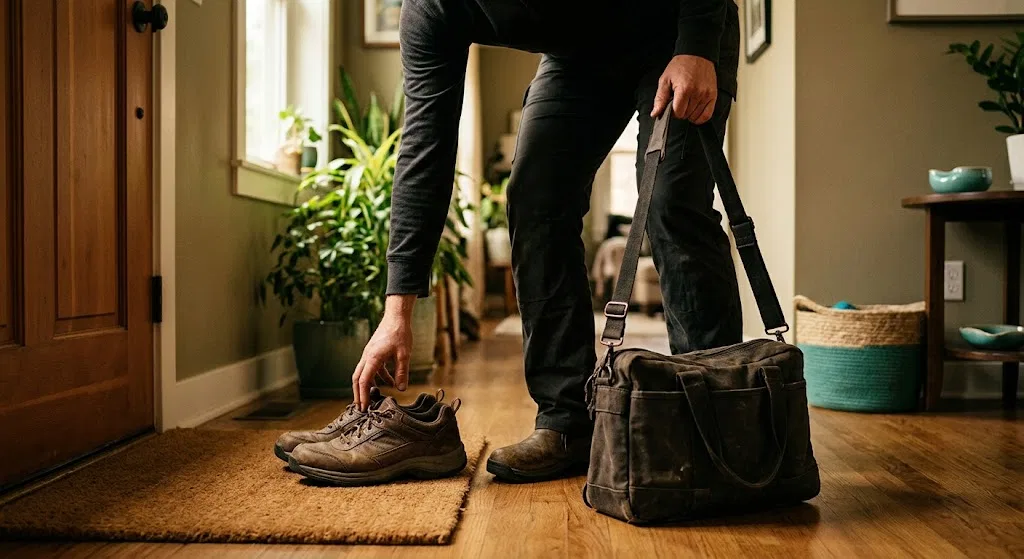
A behaviour becomes more automatic when the same response is repeatedly performed in the presence of a recurring cue. At first, the cue may simply remind you of a decision you have already made: after breakfast, you deliberately take a vitamin; when you sit at your desk, you consciously open your study notes. With repeated pairings, the relationship can change. The situation itself becomes increasingly capable of activating the response, so less deliberate prompting is needed each time. Habit researchers describe this as the strengthening of a learned cue–response association.[PubMed]pubmed.ncbi.nlm.nih.govPub Med Psychology of HabitPsychology of Habit - PubMedSeptember 10, 2015…
This matters for self-improvement because deliberate control is expensive. Remembering, deciding and overcoming hesitation must be repeated every time an action depends entirely on intention. A useful habit reduces that recurring demand. The aim is not to make behaviour literally unconscious, nor to eliminate choice, but to make the desired response easier to initiate when the relevant situation appears.
From deliberate action to cue response
Habit formation begins with deliberate behaviour. A person chooses an action because it serves some goal, performs it in a particular situation, and then encounters broadly the same situation again. If the same response keeps following that situation, memory begins to encode the relationship between the context and the action. Reviews of habit research therefore distinguish habits from mere frequency: what matters is not simply that something has been done many times, but that it has been repeatedly performed in relation to recurring cues.[PubMed Central (PMC)]pmc.ncbi.nlm.nih.govPubMed Central (PMC)A review and analysis of the use of ‘habit’ in understanding, predicting and influencing health-related behaviour - P…
Those cues need not be a single object such as an alarm or a sticky note. A cue can be a place, time, preceding action, group of people or recurring combination of circumstances. “After I put my breakfast plate in the dishwasher” is one cue configuration; “when I arrive at the office and sit at this desk” is another. The more reliably a particular context is followed by the same response, the more opportunity there is for the context to acquire predictive value.
The practical consequence is a gradual change in what gets the behaviour started. Early in learning, the sequence may look roughly like this:
Situation → remembering the goal → deciding to act → action.
With stronger habit learning, it can increasingly resemble:
Familiar situation → activated response → action.
That does not mean goals become irrelevant. Goals often explain why a person starts practising a behaviour in the first place and why they continue arranging opportunities to perform it. But once cue–response learning becomes strong, moment-to-moment initiation can rely less heavily on renewed conscious decision-making. Wood and Rünger’s major review describes habits as an efficient default form of responding that can operate alongside deliberate goal pursuit rather than simply replacing it.[PubMed]pubmed.ncbi.nlm.nih.govPub Med Psychology of HabitPsychology of Habit - PubMedSeptember 10, 2015…
Recent experimental work provides unusually direct evidence for this mechanism. In two studies published in 2024, Jennifer Labrecque, Kristen Lee and Wendy Wood had participants practise a multi-step simulated sushi-making task. Greater practice produced stronger measured associations between task cues and the corresponding responses. Those associations, in turn, predicted better performance when participants later completed the task under cognitive load, when deliberative processing was deliberately made harder. Importantly, practice did not appear to improve performance merely by strengthening people’s intentions or motivation to do the task correctly.[PubMed]pubmed.ncbi.nlm.nih.govPub Med Measuring context-response associations that drive habitsMeasuring context-response associations that drive habits - PubMedDecember 4, 2023…
That finding captures the distinctive value of automaticity. Repetition can alter not only how much someone wants to perform an action, but how readily the environment itself calls up the practised response.
Automaticity usually grows gradually
Habit formation is better understood as a learning curve than as a switch that flips on a particular day. In a well-known real-world study, Phillippa Lally and colleagues asked 96 adults to select an eating, drinking or activity behaviour and repeat it daily in the same context for 12 weeks. Among participants whose data could be modelled, automaticity generally rose quickly at first and then increased more slowly towards a plateau. Estimated times to reach 95% of each person’s eventual automaticity ranged from 18 to 254 days.[Wiley Online Library]onlinelibrary.wiley.comWiley Online LibraryHow are habits formed: Modelling habit formation in the real world - Lally - 2010 - European Journal of Social Psycho…
This is why the popular claim that a habit takes a fixed number of days is misleading. A 2024 systematic review of 20 studies involving 2,601 participants found wide variation across people and behaviours; studies continued to show habit strengthening beyond the first month, and reported formation times varied substantially. The review identified repetition frequency, timing, behavioural characteristics and contextual stability among the factors associated with habit development.[PubMed Central (PMC)]pmc.ncbi.nlm.nih.govOpen source on nih.gov.
The useful question, then, is not “Has it been 21, 30 or 66 days yet?” It is “Is this situation increasingly prompting the response with less deliberation than before?”
Why repetition alone is not enough
“Repeat it until it becomes a habit” is directionally right but incomplete. Repetition is most useful for cue–response learning when it repeatedly connects the same kind of cue with the same response. Doing an action 40 times in unrelated circumstances does not provide the same learning conditions as repeatedly responding to a recurring situation.
Research on context stability supports this distinction. In a 2022 study, 95 university students deliberately developed new study habits over six weeks. One group was instructed to keep the place and time of performance stable, while another deliberately varied them. A second dataset examined 308 habits recorded by users of a habit-building app. Across both datasets, greater context stability predicted stronger automaticity and better attainment of repetition goals.[Frontiers]frontiersin.orgOpen source on frontiersin.org.
Context stability should not be interpreted as a requirement to reproduce every detail perfectly. The useful unit is the cue that can be encountered reliably enough to guide action. For one person, a clock time may be dependable. For another, an existing routine is more predictable: “after breakfast”, “when I close my laptop after work” or “after I brush my teeth”.
A randomised trial of 192 adults helps clarify this point. Participants chose an everyday nutrition behaviour and linked it either to a specific time or to an existing daily routine. Over 84 days, both groups increased in automaticity, with no meaningful advantage for routine-based over time-based cues. What predicted automaticity particularly strongly was repeated enactment of the planned response when the chosen cue occurred. Among those who successfully formed habits, the median time to peak automaticity was 59 days.[BPS Psych Hub]bpspsychub.onlinelibrary.wiley.comOpen source on wiley.com.
The practical lesson is therefore broader than “always use an existing routine” or “always do it at 7 am”. The stronger principle is: choose a cue you can actually encounter consistently, then make the intended response repeatedly follow it.
Missed repetitions are interruptions, not resets
Stable repetition does not require perfection. In Lally and colleagues’ 12-week study, missing a single opportunity did not materially disrupt the overall automaticity curve.[Wiley Online Library]onlinelibrary.wiley.comWiley Online LibraryHow are habits formed: Modelling habit formation in the real world - Lally - 2010 - European Journal of Social Psycho… This matters because an all-or-nothing interpretation of habit building can itself become counterproductive: missing Tuesday does not erase what was learned on Monday.
Repeated omissions can matter, however, because every missed cue–response pairing is a lost learning opportunity. The distinction is between an occasional lapse and a pattern in which the chosen cue repeatedly appears without the target response. The latter weakens the regularity that habit learning depends upon.
That suggests a useful way to govern the process: treat lapses diagnostically rather than morally. If an action repeatedly fails to occur after its planned cue, inspect the arrangement. Perhaps the cue is easy to miss, the response is too difficult to perform in that moment, or the surrounding context keeps changing. The problem may be the learning conditions rather than insufficient determination.
Rewards may help, but they are not a magic ingredient
Learning theories often give reward a role in strengthening repeated behaviour, but the evidence for exactly how reward affects real-world human habit formation is less settled than popular advice sometimes implies. A longitudinal study of flossing and vitamin use found that pleasure and other perceived rewards were associated with habit formation, but the pathways were complex and the authors treated the work as exploratory.[PubMed]pubmed.ncbi.nlm.nih.govPub Med Exploratory study of the impact of perceived reward on habit formationPub Med Exploratory study of the impact of perceived reward on habit formation
A more recent six-month longitudinal study published in 2026 also found that stronger habit trajectories were associated with several factors, including behaviour frequency, context stability, autonomous motivation and positive feelings, while perceived difficulty was negatively associated with habit strength. The authors emphasised that habit formation is dynamic rather than determined by repetition alone.[PubMed]pubmed.ncbi.nlm.nih.govOpen source on nih.gov.
For self-improvement, the safest conclusion is not that every behaviour needs an artificial prize. It is that a response people are willing and able to repeat has more chances to become associated with its cue. Enjoyment, perceived benefit and low difficulty may matter partly because they keep the repetition process alive.
Automaticity is not the same as mindless repetition
The language of “automatic” behaviour can invite exaggeration. Habit researchers generally use automaticity to describe characteristics such as reduced deliberation, greater efficiency, or initiation with relatively little conscious prompting. A behaviour need not be completely unconscious or impossible to stop in order to qualify as increasingly habitual.[PubMed Central (PMC)]pmc.ncbi.nlm.nih.govPubMed Central (PMC)A review and analysis of the use of ‘habit’ in understanding, predicting and influencing health-related behaviour - P…
Nor does frequency by itself prove that a habit exists. Someone may drink coffee every morning because they deliberately decide they want it every morning. Another person may begin making coffee almost reflexively upon entering the kitchen. The outward behaviour is equally frequent, but the psychological control may differ.
This distinction creates a measurement problem. Much real-world habit research relies on questionnaires asking people whether an action feels automatic or happens without thinking. The widely used Self-Report Behavioural Automaticity Index is useful and concise, but its developers note that self-report automaticity is not a perfect direct measure of the underlying cue–response association. People may report automaticity produced by other processes, and introspection about actions that require little awareness is inherently imperfect.[PubMed Central (PMC)]pmc.ncbi.nlm.nih.govOpen source on nih.gov.
Laboratory evidence is also more complicated than the slogan “enough repetitions always produce a habit”. Researchers have sometimes tested habit by changing the value of an outcome and asking whether heavily practised participants keep making the old response. Five experiments reported in 2018 failed to show that more extensive training reliably produced greater outcome-insensitive responding in healthy human participants. The researchers concluded that experimentally producing and measuring human habits through overtraining is considerably less straightforward than animal-learning models might suggest.[PubMed Central (PMC)]pmc.ncbi.nlm.nih.govOpen source on nih.gov.
Later work has produced more promising experimental measures. A 2022 study found evidence of stimulus-driven responding in an outcome-revaluation task, while the 2024 sushi-task experiments directly linked practice to measurable cue–response association strength. Together, the literature supports cue–response learning while also warning against treating every repeated action, laboratory overtraining effect or self-reported feeling of ease as interchangeable evidence of habit.[PubMed]pubmed.ncbi.nlm.nih.govOpen source on nih.gov.
Recognising growing automaticity
Because automaticity develops gradually, progress is better detected through changes in how the behaviour is initiated than through a calendar milestone.
One sign is less need to remember deliberately. At first, you may need an alarm to remind you to stretch after lunch. Later, finishing lunch itself begins to bring the action to mind.
Another is reduced decision friction. Early repetitions can contain a visible negotiation: “Should I do it now or later?” With stronger cue–response learning, that decision occupies less attention because the practised response becomes the expected next move.
A third sign is greater fluency in the familiar context. The action starts more readily when the associated cue appears, even when attention is partly occupied elsewhere. This is close to what the 2024 cue–response experiments demonstrated: stronger learned associations predicted successful performance under cognitive load.[PubMed]pubmed.ncbi.nlm.nih.govPub Med Measuring context-response associations that drive habitsMeasuring context-response associations that drive habits - PubMedDecember 4, 2023…
A fourth, sometimes revealing, sign is that the cue triggers an impulse even when you cannot act. Walking into the kitchen may make you reach towards the kettle; sitting at the usual desk may prompt you to open the document you normally work on. Habit researchers note that habitual impulses can be experienced even when the response is subsequently inhibited.[PubMed Central (PMC)]pmc.ncbi.nlm.nih.govPubMed Central (PMC)A review and analysis of the use of ‘habit’ in understanding, predicting and influencing health-related behaviour - P…
Finally, context disruption can expose how much cueing was doing. A behaviour that feels effortless at home may suddenly require conscious effort during travel or after moving offices because the old cues are absent. This does not necessarily mean the habit has vanished; it shows that its expression was partly dependent on a learned context. Research on context stability is consistent with exactly this dependence.[PubMed Central (PMC)]pmc.ncbi.nlm.nih.govOpen source on nih.gov.
None of these indicators should be treated as a test that an action has crossed an invisible line into “habit”. Automaticity is better viewed as a degree of learned responsiveness. The useful change is that a stable situation increasingly does some of the prompting that conscious intention previously had to supply.

Make the cue–response link do the work
For self-improvement, the mechanism suggests a simple design rule: do not merely schedule repeated behaviour; engineer repeated pairings between a recognisable cue and a feasible response.
That can mean linking ten minutes of study to sitting down after dinner, taking prescribed daily medication immediately after a stable morning routine, or starting a short mobility exercise after shutting down a work computer. The cue should be common enough to provide practice opportunities and dependable enough that the response can repeatedly follow it.
The response itself should also be stable enough to learn. If “exercise after work” means running on Monday, driving across town to swim on Tuesday, joining an online class on Wednesday and improvising something else on Thursday, the broad goal is consistent but the cue may not become strongly associated with one readily retrievable response. Where automatic initiation is the aim, a smaller, repeatable starting action — for example, changing into training clothes immediately after arriving home — can provide a clearer cue–response unit, even if the larger workout varies afterwards.
This is the central governance advantage of habit formation. Instead of requiring the future self to keep making the same good decision, the present self arranges conditions in which a good response can be learned. Repetition then changes the burden of control: the choice that initially required remembering and deliberation becomes increasingly supported by the situations in which it has repeatedly been performed.
The evidence does not justify promises that any behaviour will become effortless after a fixed number of repetitions. People differ, behaviours differ, contexts change, and even the measurement of habit remains an active research problem. But the core finding is robust enough to be practically useful: repeated responding in stable contexts can strengthen cue–response associations, and as those associations strengthen, behaviour can require less deliberate prompting to begin.[kcl.ac.uk]kclpure.kcl.ac.ukOpen source on kcl.ac.uk.
Amazon book picks
Further Reading
Books and field guides related to How Repetition Turns a Choice Into a Habit. Use these as the next step if you want deeper reading beyond the article.
Good Habits, Bad Habits
'The world's leading expert on habits' - Matthew Syed, bestselling author of Black Box Thinking and Rebel IdeasWhat if you could harness...
Atomic Habits
Rating: 3.5/5 from 7 Google Books ratings
The #1 New York Times bestseller. Over 25 million copies sold! Translated into 60+ languages! Tiny Changes, Remarkable Results No matter...
The Power of Habit
Rating: 4.0/5 from 145 Google Books ratings
Duhigg takes us to the edge of scientific discoveries that explain why habits exist and how they can be changed. Distilling information i...
Tiny Habits
Improving your life is much easier than you think. Whether it’s losing weight, sleeping more, or restoring your work/life balance – the s...
eBay marketplace picks
Marketplace Samples
Live-tested eBay searches with available results related to this page.
Selected frommotivational wall art oneBay.co.uk.


Endnotes
1.
Source: onlinelibrary.wiley.com
Title: Online Library Measuring context–response associations that drive habits
Link:https://onlinelibrary.wiley.com/doi/full/10.1002/jeab.893
Source snippet
Wiley Online LibraryMeasuring context–response associations that drive habits - Labrecque - 2024 - Journal of the Experimental Analysis o...
2.
Source: onlinelibrary.wiley.com
Link:https://onlinelibrary.wiley.com/doi/pdf/10.1002/ejsp.674
Source snippet
Wiley Online LibraryHow are habits formed: Modelling habit formation in the real world - Lally - 2010 - European Journal of Social Psycho...
3.
Source: onlinelibrary.wiley.com
Link:https://onlinelibrary.wiley.com/doi/abs/10.1002/ejsp.674?msockid=038ed114f43667dd0790c4bef5146634
4.
Source: bpspsychub.onlinelibrary.wiley.com
Link:https://bpspsychub.onlinelibrary.wiley.com/doi/abs/10.1111/bjhp.12504
5.
Source: bpspsychub.onlinelibrary.wiley.com
Link:https://bpspsychub.onlinelibrary.wiley.com/doi/10.1111/bjop.70065
6.
Source: bpspsychub.onlinelibrary.wiley.com
Link:https://bpspsychub.onlinelibrary.wiley.com/doi/10.1111/bjop.70065?af=R
7.
Source: compass.onlinelibrary.wiley.com
Link:https://compass.onlinelibrary.wiley.com/doi/full/10.1111/spc3.12975
8.
Source: compass.onlinelibrary.wiley.com
Link:https://compass.onlinelibrary.wiley.com/doi/abs/10.1111/spc3.12975
9.
Source: compass.onlinelibrary.wiley.com
Link:https://compass.onlinelibrary.wiley.com/doi/10.1111/spc3.12975
10.
Source: bpspsychub.onlinelibrary.wiley.com
Link:https://bpspsychub.onlinelibrary.wiley.com/doi/10.1111/bjhp.12637
11.
Source: compass.onlinelibrary.wiley.com
Link:https://compass.onlinelibrary.wiley.com/doi/10.1111/spc3.12323
12.
Source: iaap-journals.onlinelibrary.wiley.com
Link:https://iaap-journals.onlinelibrary.wiley.com/doi/10.1111/aphw.12017
13.
Source: onlinelibrary.wiley.com
Link:https://onlinelibrary.wiley.com/doi/abs/10.1002/ejsp.674?538fcd4b_page=6&947f74f7_page=5
14.
Source: onlinelibrary.wiley.com
Link:https://onlinelibrary.wiley.com/doi/abs/10.1002/ejsp.674
15.
Source: onlinelibrary.wiley.com
Link:https://onlinelibrary.wiley.com/doi/10.1002/9780470713150.ch6
16.
Source: bpspsychub.onlinelibrary.wiley.com
Link:https://bpspsychub.onlinelibrary.wiley.com/share/SFKV2IDZIZUZFJF4X9N2?target=10.1111%2Fbjhp.12504
17.
Source: pubmed.ncbi.nlm.nih.gov
Title: Pub Med Psychology of Habit
Link:https://pubmed.ncbi.nlm.nih.gov/26361052/
Source snippet
Psychology of Habit - PubMedSeptember 10, 2015...
Published: September 10, 2015
18.
Source: pmc.ncbi.nlm.nih.gov
Link:https://pmc.ncbi.nlm.nih.gov/articles/PMC4566897/
Source snippet
PubMed Central (PMC)A review and analysis of the use of ‘habit’ in understanding, predicting and influencing health-related behaviour - P...
19.
Source: pubmed.ncbi.nlm.nih.gov
Title: Pub Med Psychology of Habit
Link:https://pubmed.ncbi.nlm.nih.gov/26361052/?dopt=Abstract
Source snippet
Psychology of Habit - PubMedSeptember 10, 2015...
Published: September 10, 2015
20.
Source: pubmed.ncbi.nlm.nih.gov
Title: Pub Med Measuring context-response associations that drive habits
Link:https://pubmed.ncbi.nlm.nih.gov/38047612/
Source snippet
Measuring context-response associations that drive habits - PubMedDecember 4, 2023...
Published: December 4, 2023
21.
Source: pmc.ncbi.nlm.nih.gov
Link:https://pmc.ncbi.nlm.nih.gov/articles/PMC11641623/
22.
Source: frontiersin.org
Link:https://www.frontiersin.org/journals/psychology/articles/10.3389/fpsyg.2022.883795/full
23.
Source: pubmed.ncbi.nlm.nih.gov
Link:https://pubmed.ncbi.nlm.nih.gov/35756236/
24.
Source: pubmed.ncbi.nlm.nih.gov
Link:https://pubmed.ncbi.nlm.nih.gov/33405284/
25.
Source: pubmed.ncbi.nlm.nih.gov
Title: Pub Med Exploratory study of the impact of perceived reward on habit formation
Link:https://pubmed.ncbi.nlm.nih.gov/30572936/
26.
Source: pubmed.ncbi.nlm.nih.gov
Link:https://pubmed.ncbi.nlm.nih.gov/42053513/
27.
Source: pmc.ncbi.nlm.nih.gov
Link:https://pmc.ncbi.nlm.nih.gov/articles/PMC3552971/
28.
Source: pmc.ncbi.nlm.nih.gov
Link:https://pmc.ncbi.nlm.nih.gov/articles/PMC6033090/
29.
Source: pubmed.ncbi.nlm.nih.gov
Link:https://pubmed.ncbi.nlm.nih.gov/29975092/
30.
Source: pubmed.ncbi.nlm.nih.gov
Link:https://pubmed.ncbi.nlm.nih.gov/35867208/
31.
Source: pmc.ncbi.nlm.nih.gov
Link:https://pmc.ncbi.nlm.nih.gov/articles/PMC9226889/
32.
Source: kclpure.kcl.ac.uk
Link:https://kclpure.kcl.ac.uk/portal/en/publications/how-does-habit-form-guidelines-for-tracking-real-world-habit-form/
33.
Source: pubmed.ncbi.nlm.nih.gov
Link:https://pubmed.ncbi.nlm.nih.gov/39685110/
34.
Source: doi.org
Link:https://doi.org/10.3390/healthcare12232488
35.
Source: pubmed.ncbi.nlm.nih.gov
Link:https://pubmed.ncbi.nlm.nih.gov/39225981/
36.
Source: pmc.ncbi.nlm.nih.gov
Link:https://pmc.ncbi.nlm.nih.gov/articles/PMC7615722/
37.
Source: pubmed.ncbi.nlm.nih.gov
Link:https://pubmed.ncbi.nlm.nih.gov/38149526/
38.
Source: frontiersin.org
Link:https://www.frontiersin.org/journals/neuroscience/articles/10.3389/fnins.2022.996957/full
39.
Source: doi.org
Link:https://doi.org/10.3758/S13428-022-01922-4
40.
Source: pubmed.ncbi.nlm.nih.gov
Link:https://pubmed.ncbi.nlm.nih.gov/33502088/
41.
Source: doi.org
Link:https://doi.org/10.1111/bjhp.12504
42.
Source: pmc.ncbi.nlm.nih.gov
Link:https://pmc.ncbi.nlm.nih.gov/articles/PMC6974578/
43.
Source: frontiersin.org
Link:https://www.frontiersin.org/journals/psychology/articles/10.3389/fpsyg.2019.02927/full
44.
Source: pmc.ncbi.nlm.nih.gov
Link:https://pmc.ncbi.nlm.nih.gov/articles/PMC6302524/
45.
Source: kclpure.kcl.ac.uk
Title: kcl.ac.uk Exploratory study of the impact of perceived reward on habit formation
Link:https://kclpure.kcl.ac.uk/portal/en/publications/exploratory-study-of-the-impact-of-perceived-reward-on-habit-form/
46.
Source: pubmed.ncbi.nlm.nih.gov
Link:https://pubmed.ncbi.nlm.nih.gov/29787620/
47.
Source: pubmed.ncbi.nlm.nih.gov
Link:https://pubmed.ncbi.nlm.nih.gov/29411951/
48.
Source: pmc.ncbi.nlm.nih.gov
Link:https://pmc.ncbi.nlm.nih.gov/articles/PMC4500900/
49.
Source: pubmed.ncbi.nlm.nih.gov
Link:https://pubmed.ncbi.nlm.nih.gov/26236214/
50.
Source: frontiersin.org
Link:https://www.frontiersin.org/journals/human-neuroscience/articles/10.3389/fnhum.2015.00395/full
51.
Source: pmc.ncbi.nlm.nih.gov
Link:https://pmc.ncbi.nlm.nih.gov/articles/PMC4296343/
52.
Source: kclpure.kcl.ac.uk
Title: kcl.ac.uk Promoting habit formation
Link:https://kclpure.kcl.ac.uk/portal/en/publications/promoting-habit-formation/
54.
Source: pubmed.ncbi.nlm.nih.gov
Link:https://pubmed.ncbi.nlm.nih.gov/21749245/
55.
Source: kclpure.kcl.ac.uk
Title: kcl.ac.uk Experiences of habit formation: A qualitative study
Link:https://kclpure.kcl.ac.uk/portal/en/publications/experiences-of-habit-formation-a-qualitative-study
56.
Source: pubmed.ncbi.nlm.nih.gov
Link:https://pubmed.ncbi.nlm.nih.gov/20658824/
57.
Source: pubmed.ncbi.nlm.nih.gov
Link:https://pubmed.ncbi.nlm.nih.gov/28188586/
Additional References
58.
Source: tandfonline.com
Link:https://www.tandfonline.com/doi/full/10.1080/17437199.2011.603640
Source snippet
Taylor & Francis OnlinePromoting habit formation: Health Psychology Review: Vol 7, No sup1 - Get Access...
59.
Source: youtube.com
Title: You Don’t Need Discipline, You Need a System | The Real Formula to Build Habits
Link:https://www.youtube.com/watch?v=prAx3yc5kvQ
Source snippet
These videos are relevant because they explain the neurological and psychological mechanisms of the cue-response habit loop, detailing ho...
60.
Source: nature.com
Link:https://www.nature.com/articles/s41386
61.
Source: youtube.com
Link:https://www.youtube.com/watch?v=i4-CnaZllMo
Source snippet
You Don't Need Discipline, You Need a System | The Real Formula to Build Habits...
62.
Source: youtube.com
Title: The Science of Habit Formation: Cue, Craving, Response & Reward
Link:https://www.youtube.com/watch?v=Z2pmq88IGfo
Source snippet
The Neuroscience of Habits & How They Shape Us...
63.
Source: researchgate.net
Link:https://www.researchgate.net/publication/259287063A_review_and_analysis_of_the_use_of%27habit%27_in_understanding_predicting_and_influencing_health-related_behaviour
64.
Source: researchgate.net
Link:https://www.researchgate.net/publication/348328187_Habit_formation_following_routine-based_versus_time-based_cue_planning_A_randomized_controlled_trial
65.
Source: researchgate.net
Link:https://www.researchgate.net/publication/386593213_Time_to_Form_a_Habit_A_Systematic_Review_and_Meta-Analysis_of_Health_Behaviour_Habit_Formation_and_Its_Determinants
66.
Source: guilfordjournals.com
Link:https://guilfordjournals.com/doi/10.1521/soco.2007.25.2.248
67.
Source: sciencedirect.com
Link:https://www.sciencedirect.com/science/article/pii/S019188691730274X