Within Exercise
Are You Tracking Exercise or Remembering It Optimistically?
A simple record of completed sessions can separate actual exercise from plans, impressions, and optimistic memory.
On this page
- Why intentions and completed sessions are easy to confuse
- Choosing the lightest useful exercise record
- Using wearables and logs without making tracking the workout
Page outline Jump by section
Introduction
An exercise plan says what was supposed to happen; a session record says what actually happened. That distinction is surprisingly important. Physical-activity questionnaires and retrospective estimates are vulnerable to imperfect recall and reporting bias, and research comparing self-reports with device measurements often finds only modest agreement. A simple contemporaneous record — for example, date, activity and minutes completed — gives a routine a much firmer evidence trail.[PubMed Central (PMC)]pmc.ncbi.nlm.nih.govPubMed Central (PMC)A comparison of direct versus self-report measures for assessing physical activity in adults: a systematic review - P…
The useful question is therefore not “Do I think I exercise regularly?” but “Which sessions can I point to?” The record need not become a second fitness hobby. Paper diaries, calendar ticks, phone notes and automatically recorded wearable data can all make behaviour visible. Evidence also suggests that self-monitoring can contribute to increasing physical activity, particularly when it is connected to goals or feedback, although monitoring alone is not uniformly effective.[nih.gov]pubmed.ncbi.nlm.nih.govEffective techniques in healthy eating and physical activity interventions: a meta-regression - PubMed…
For a routine already built around reliable cues and convenient opportunities, that gives the record a narrow but valuable job: reveal whether the intended cue-to-exercise sequence is repeatedly producing completed sessions.
Why intentions and completed sessions are easy to confuse
A person can have a well-designed routine without consistently performing it. “I run on Monday, Wednesday and Friday” might describe a genuine pattern, an aspiration, or a mixture of successful weeks and missed sessions. Without a record, those possibilities are difficult to distinguish retrospectively.
Research on physical-activity measurement explains part of the problem. A systematic review covering 187 studies with comparable self-report and direct-measure data found generally low-to-moderate correlations between the two approaches. Self-report sometimes produced higher and sometimes lower estimates, depending on the activity and measurement method. Recall error and socially desirable responding are among the recognised sources of disagreement.[PubMed Central (PMC)]pmc.ncbi.nlm.nih.govPubMed Central (PMC)A comparison of direct versus self-report measures for assessing physical activity in adults: a systematic review - P… Another systematic review examining physical-activity questionnaires found that reliability — obtaining similar answers repeatedly — was generally better than validity against objective measures. In other words, a questionnaire can produce reasonably consistent answers without necessarily reconstructing activity particularly accurately.[PubMed Central (PMC)]pmc.ncbi.nlm.nih.govPubMed Central (PMC)A systematic review of reliability and objective criterion-related validity of physical activity questionnaires - PMC…
The length of the recall period matters too. In one study of 121 young adults, accelerometers recorded an average 3.2 hours of moderate-to-vigorous physical activity per week. A one-week recall produced 2.2 hours, while a one-year recall produced 13.7 hours. The authors concluded that the one-year measure substantially overestimated total activity and that the shorter recall performed much better for estimating an individual’s absolute activity.[PubMed Central (PMC)]pmc.ncbi.nlm.nih.govPubMed Central (PMC)Evaluation of two self-report measures of physical activity with accelerometry in young adults - PMCJanuary 12, 2012… That particular numerical discrepancy should not be treated as a universal correction factor, but it illustrates why “I am usually quite active” is weak evidence about what happened during particular weeks.
A session record changes the question from retrospective reconstruction to accumulated observations. If the intended routine is three sessions each week, six weeks of dated records can answer basic questions that memory handles poorly: Were there actually 18 sessions? Were Mondays reliable but Fridays repeatedly missed? Did the routine survive busy weeks? Did “three times a week” quietly become once or twice?
That is the branch-specific value of tracking. The record is not principally there to prove fitness, calories burned or athletic performance. It provides evidence about routine execution.
Choose the lightest record that answers the question
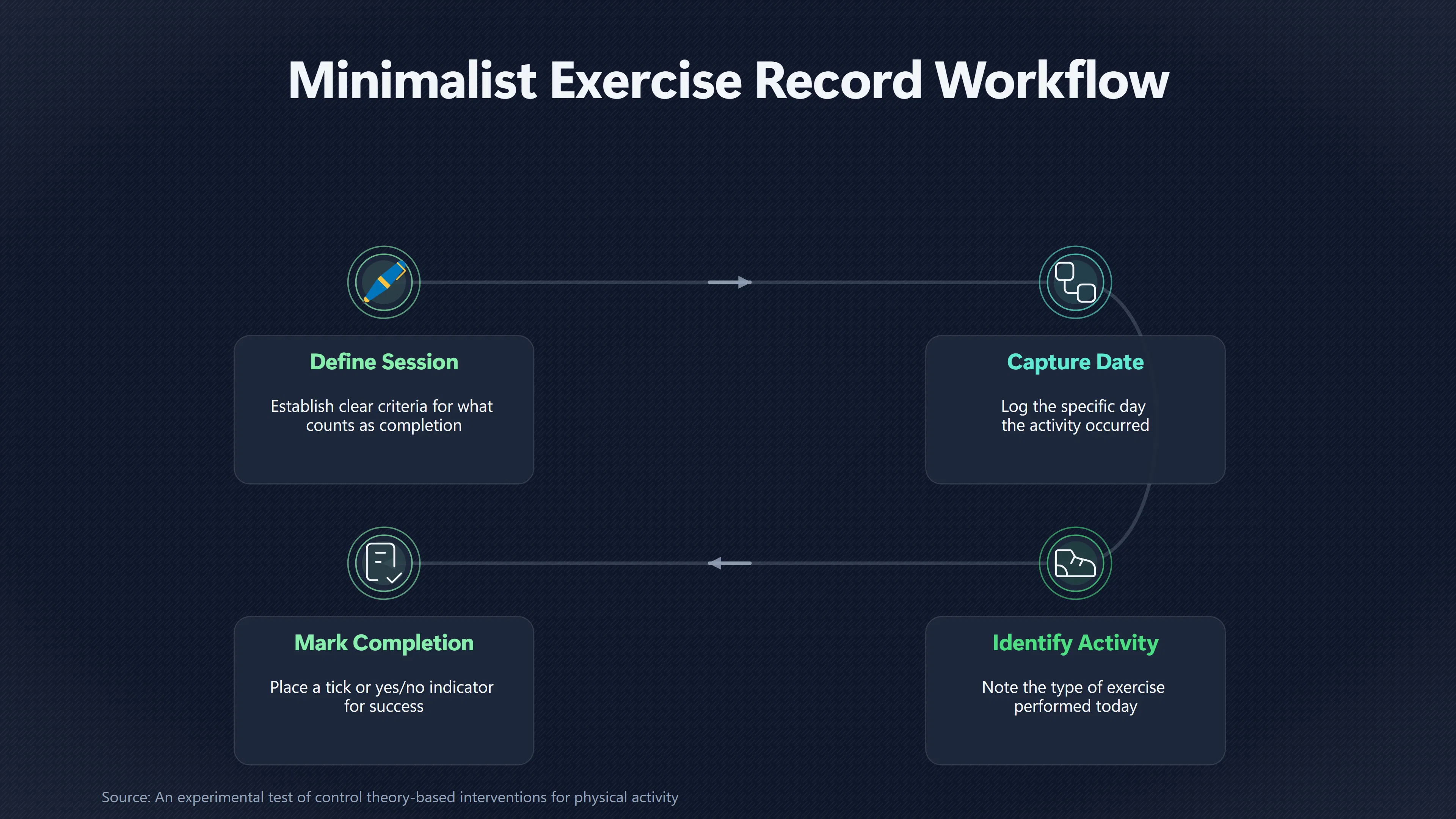
A useful exercise record does not need to capture everything measurable about exercise. In fact, excessive detail creates another behaviour that must itself be maintained. If the purpose is simply to discover whether the planned routine happens, the minimum useful dataset is usually small:
- Date — when the session happened.
- Activity — enough description to identify what counted, such as “walk”, “gym” or “cycle”.
- Completion — a tick, yes/no field or equivalent indication that the intended session occurred.
- Duration or another simple threshold, where necessary — useful when the definition of a session requires, for example, at least 20 minutes.
That is enough to distinguish a completed session from an intention. Optional details such as distance, sets, repetitions, heart rate, pace, perceived exertion or calories are useful only when they answer another genuine question. They are not prerequisites for knowing whether the routine occurred.
There is precedent for deliberately simple records in physical-activity research. In the 488-participant Get Moving randomised trial, the paper-diary group received a pocket-sized diary and recorded physical activity of at least ten minutes, including whether activity occurred, its type, start time and duration. Other groups used an accelerometer with web-based graphical feedback, with or without additional virtual coaching.[Springer]link.springer.comProtocol for Get Moving: a randomised controlled trial to assess the effectiveness of three minimal contact interventions to prom…
The eventual trial results are a useful warning against assuming that more recording automatically produces more exercise. There was no overall statistically significant difference between the four groups in physical-activity energy expenditure or fitness; the paper-diary group did not show the increases seen in the other groups, and the tracker-plus-coaching group improved physical-activity energy expenditure more than the diary group.[PubMed Central (PMC)]pmc.ncbi.nlm.nih.govPub Med Central (PMC)Effectiveness of Minimal Contact Interventions: An RCTPubMed Central (PMC)Effectiveness of Minimal Contact Interventions: An RCT - PMC… A record can therefore reveal behaviour without necessarily being a powerful intervention by itself.
That distinction matters. Measurement and behaviour change are related but not identical jobs. A calendar tick can be perfectly adequate evidence that Tuesday’s run happened even if the tick itself does nothing to make someone run.
What self-monitoring can — and cannot — change
There is nevertheless substantial evidence that making physical activity visible can form part of effective behaviour change. A meta-regression covering 122 evaluations and 44,747 participants found that self-monitoring accounted for more between-study variation in effectiveness than the other individual behaviour-change techniques examined. Interventions combining self-monitoring with at least one additional self-regulation technique, such as goal setting or feedback, performed better on average than interventions without that combination.[PubMed]pubmed.ncbi.nlm.nih.govEffective techniques in healthy eating and physical activity interventions: a meta-regression - PubMed…
More recent synthesis gives a more qualified picture. A meta-review of self-regulatory behaviour-change techniques found mixed results for physical-activity self-monitoring: some reviews reported benefits and others did not, and the quality of the underlying reviews was generally limited.[PubMed Central (PMC)]pmc.ncbi.nlm.nih.govPubMed Central (PMC)Self-regulatory behavior change techniques in interventions to promote healthy eating, physical activity, or weight l… This is a reason to resist the simplistic claim that “tracking works” as though recording were a standalone treatment.
The more defensible interpretation is that a record creates a feedback signal. A goal describes the desired behaviour; monitoring supplies information about current behaviour; comparing the two exposes a discrepancy. An experiment involving 124 insufficiently active adults supports the importance of that combination: participants receiving goal setting, self-monitoring and feedback subsequently showed greater accelerometer-measured activity than those receiving goal setting alone.[DOI]doi.orgAn experimental test of control theory‐based interventions for physical activityAn experimental test of control theory‐based interventions for physical activity - Prestwich - 2016 - British Journal of Health Psycho…
A Finnish primary-care trial offers another concrete example. Participants assigned to self-monitoring used a pedometer and physical-activity log and received feedback on five-day recordings. Compared with controls, the intervention produced a short-term increase in reported overall physical-activity duration, although the study combined monitoring with feedback, making it inappropriate to credit the log alone.[PubMed]pubmed.ncbi.nlm.nih.govOpen source on nih.gov.
For someone evaluating an exercise routine, the practical implication is modest but useful. Do not expect the existence of a spreadsheet, watch or diary to manufacture consistency. Use the record to expose the difference between the intended pattern and the completed one.
Read the gaps as data
The most informative part of a session log may be its blank spaces. Suppose the intended routine is a 25-minute walk immediately after work on Monday, Wednesday and Friday. A month’s record might look conceptually like this:
Week 1: Monday ✓ · Wednesday ✓ · Friday ✓
Week 2: Monday ✓ · Wednesday ✓ · Friday —
Week 3: Monday ✓ · Wednesday — · Friday —
Week 4: Monday ✓ · Wednesday ✓ · Friday —
Without requiring elaborate analytics, the pattern already says something useful. Monday’s routine appears robust. Friday’s does not. The appropriate response is not to rewrite the history as “I exercise roughly three times a week”, nor necessarily to abandon the whole routine. The evidence identifies a narrower problem: the Friday cue, timing or surrounding circumstances are not producing the intended behaviour reliably.
This is where session records connect naturally to exercise routines built around cues and convenience. A cue is a hypothesis about what will reliably initiate exercise; repeated completed sessions are evidence that it is working in ordinary life. Repeated omissions are evidence that something in that particular arrangement deserves examination.
A missed session should therefore remain visible. Deleting it, shifting a planned session after the fact or counting a vague intention as exercise destroys some of the record’s informational value. The purpose is not to maintain an impressive streak. It is to make the behavioural pattern legible enough to improve it.
Use wearables without making tracking the workout
Wearables solve one genuine problem with manual records: they can collect substantial amounts of activity data without requiring a person to remember every entry. Systematic reviews support their usefulness as physical-activity interventions. A 2022 umbrella review covering 39 systematic reviews and meta-analyses and 163,992 participants found that activity trackers increased physical activity across varied populations; pooled findings translated to roughly 1,800 additional steps per day in the studies examined.[PubMed]pubmed.ncbi.nlm.nih.govOpen source on nih.gov. A separate systematic review and meta-analysis likewise found evidence that physical-activity monitors can increase activity in adults.[BMJ]bmj.combmj 2021 068047bmj 2021 068047
But “objective” does not mean “complete”. Accelerometers are good at automatically capturing some forms of movement, yet they can miss or represent poorly activities such as cycling, swimming and resistance training, and they generally cannot supply all the contextual information available from a human record.[JMIR]jmir.orgJournal of Medical Internet ResearchJournal of Medical Internet Research Consumer wearables also vary in measurement accuracy. A 2024 umbrella review found considerable heterogeneity across devices and studies; errors were particularly substantial for measures such as physical-activity intensity and energy expenditure.[PubMed]pubmed.ncbi.nlm.nih.govOpen source on nih.gov.
That creates an important distinction between session evidence and measurement precision. If a watch correctly shows that a 32-minute run occurred at 07:10, uncertainty about its calorie estimate does not erase the useful evidence that the run happened. Conversely, a low step count does not prove that a planned strength session was skipped.
The sensible tracking method therefore depends on the routine:
For walking or running, automatic wearable or phone records may be nearly effortless evidence of completed sessions.
For strength training, swimming or activities that sensors capture imperfectly, a manual “done” entry may be more informative than relying on the device’s interpretation.
For mixed routines, combining automatic data with a very small manual record can preserve context without turning every session into data entry.
The technology should reduce the cost of knowing what happened. Once it starts demanding constant categorisation, dashboard checking or post-workout administration, tracking itself has acquired friction.
Keep the record trustworthy enough to use
A personal exercise log does not need laboratory-grade measurement. It does need consistent definitions. Decide in advance what counts as a completed session. “Went to the gym” might count regardless of workout length if the behavioural target is simply establishing attendance. Alternatively, a walking routine might define completion as at least 20 minutes. Either can be reasonable; changing the definition whenever a session falls short makes comparisons less meaningful.
Record close to the event where possible. This does not eliminate every reporting problem, but it reduces dependence on long-term reconstruction. Research comparing physical-activity measurement methods repeatedly identifies recall as a limitation of retrospective self-report, while direct monitoring avoids many of those memory demands.[PubMed Central (PMC)]pmc.ncbi.nlm.nih.govPubMed Central (PMC)A comparison of direct versus self-report measures for assessing physical activity in adults: a systematic review - P…
It is equally important not to confuse a missing record with definite proof of a missed workout. Manual tracking has its own adherence problem. In the SMART trial, for example, physical-activity self-monitoring declined over time across all three recording conditions; adherence was reported as 60% during weeks 1–6 and 29% during weeks 7–12. Participants using a digital device with tailored feedback recorded more frequently than those using paper, but even digital monitoring did not eliminate attrition.[PubMed Central (PMC)]pmc.ncbi.nlm.nih.govOpen source on nih.gov.
That suggests a useful rule for interpreting gaps: distinguish “no exercise” from “unknown because I did not record it” whenever the difference matters. Otherwise a tracking failure can masquerade as a routine failure.
The useful output is a pattern, not a perfect dataset
The strongest exercise record is not necessarily the richest one. It is the one that remains easy enough to maintain and specific enough to answer the behavioural question.
After several weeks, look first at completed sessions rather than elaborate performance statistics. Compare planned opportunities with recorded completions. Look for repeated gaps tied to particular days or circumstances. Notice whether a routine that feels established is actually stable across ordinary disruptions. If the record is itself repeatedly abandoned, simplify it before adding more metrics.
This restrained approach fits the evidence better than treating self-tracking as magic. Self-monitoring is a recognised behaviour-change technique and can be useful, especially alongside goals and feedback, but research does not show that every form of tracking reliably changes physical activity on its own.[PubMed Central (PMC)]pmc.ncbi.nlm.nih.govPubMed Central (PMC)Self-regulatory behavior change techniques in interventions to promote healthy eating, physical activity, or weight l… What a well-kept session record can do much more directly is replace an impression with observable history.
For self-improvement, that is a consequential upgrade. “I intend to exercise three times a week” is a plan. “Here are the sessions I completed for the past eight weeks” is evidence. The gap between those two statements is precisely what a lightweight exercise record is designed to reveal.

Amazon book picks
Further Reading
Books and field guides related to Are You Tracking Exercise or Remembering It Optimistically?. Use these as the next step if you want deeper reading beyond the article.
No Sweat
Do you secretly hate exercising? Struggle to stick with a program? Millions of people try and fail to stay fit. But what if "exercising"...
Atomic Habits
Rating: 3.5/5 from 7 Google Books ratings
The #1 New York Times bestseller. Over 25 million copies sold! Translated into 60+ languages! Tiny Changes, Remarkable Results No matter...
How to Change
Wall Street Journal bestseller “A welcome revelation.” --The Financial Times Award-winning Wharton Professor and Choiceology podcast host...
The First 20 Minutes
Discover the amazing restorative powers of chocolate milk on tired muscles, how running can actually be good for your knees and how even...
eBay marketplace picks
Marketplace Samples
Live-tested eBay searches with available results related to this page.
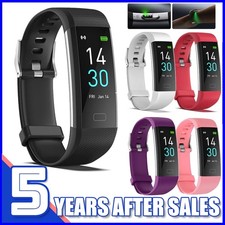
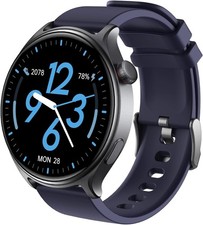
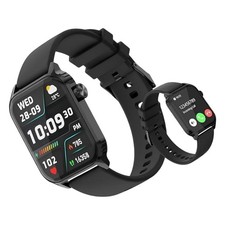
Selected fromfitness tracker watch oneBay.co.uk.
Endnotes
1.
Source: bjsm.bmj.com
Link:https://bjsm.bmj.com/content/56/23/1366
Source snippet
A systematic review and meta-analysis | British Journal of Sports Medicine...
2.
Source: doi.org
Link:https://doi.org/10.1186/1479
Source snippet
A comparison of direct versus self-report measures for assessing physical activity in adults: a systematic review | International Jour...
3.
Source: link.springer.com
Link:https://link.springer.com/article/10.1186/s12889
Source snippet
Protocol for Get Moving: a randomised controlled trial to assess the effectiveness of three minimal contact interventions to prom...
4.
Source: doi.org
Title: An experimental test of control theory‐based interventions for physical activity
Link:https://doi.org/10.1111/BJHP.12198
Source snippet
An experimental test of control theory‐based interventions for physical activity - Prestwich - 2016 - British Journal of Health Psycho...
5.
Source: doi.org
Link:https://doi.org/10.1016%2Fs2589-7500%2822%2900111-x
6.
Source: bmj.com
Title: bmj 2021 068047
Link:https://www.bmj.com/content/376/bmj-2021-068047
7.
Source: jmir.org
Title: Journal of Medical Internet Research
Link:https://www.jmir.org/2017/7/e253/
8.
Source: link.springer.com
Link:https://link.springer.com/article/10.1007/s40279-024-02077-2
9.
Source: mhealth.jmir.org
Link:https://mhealth.jmir.org/2024/1/e51216/
10.
Source: link.springer.com
Link:https://link.springer.com/article/10.1186/s12966-024-01612-8
11.
Source: link.springer.com
Link:https://link.springer.com/article/10.1007/s40279-024-02016-1
12.
Source: doi.org
Link:https://doi.org/10.1186/s12966-023-01555-6
13.
Source: doi.org
Title: Wearables in Swimming for Real-Time Feedback: A Systematic Review
Link:https://doi.org/10.3390/s22103677
14.
Source: mhealth.jmir.org
Link:https://mhealth.jmir.org/2021/4/e17581/
15.
Source: link.springer.com
Link:https://link.springer.com/article/10.1186/s12966-020-00938-3
16.
Source: link.springer.com
Link:https://link.springer.com/article/10.1186/s12966
17.
Source: bmjopen.bmj.com
Link:https://bmjopen.bmj.com/content/5/9/e008430
18.
Source: link.springer.com
Link:https://link.springer.com/article/10.1186/1479
19.
Source: doi.org
Link:https://doi.org/10.1249/00005768-199010000-00022
20.
Source: bjsm.bmj.com
Link:https://bjsm.bmj.com/content/55/8/422
21.
Source: pmc.ncbi.nlm.nih.gov
Link:https://pmc.ncbi.nlm.nih.gov/articles/PMC2588639/
Source snippet
PubMed Central (PMC)A comparison of direct versus self-report measures for assessing physical activity in adults: a systematic review - P...
22.
Source: pmc.ncbi.nlm.nih.gov
Link:https://pmc.ncbi.nlm.nih.gov/articles/PMC3492158/
Source snippet
PubMed Central (PMC)A systematic review of reliability and objective criterion-related validity of physical activity questionnaires - PMC...
23.
Source: pubmed.ncbi.nlm.nih.gov
Link:https://pubmed.ncbi.nlm.nih.gov/19916637/
Source snippet
Effective techniques in healthy eating and physical activity interventions: a meta-regression - PubMed...
24.
Source: pmc.ncbi.nlm.nih.gov
Link:https://pmc.ncbi.nlm.nih.gov/articles/PMC7429262/
Source snippet
PubMed Central (PMC)Self-regulatory behavior change techniques in interventions to promote healthy eating, physical activity, or weight l...
25.
Source: pmc.ncbi.nlm.nih.gov
Link:https://pmc.ncbi.nlm.nih.gov/articles/PMC3521871/
Source snippet
PubMed Central (PMC)Evaluation of two self-report measures of physical activity with accelerometry in young adults - PMCJanuary 12, 2012...
Published: January 12, 2012
26.
Source: pmc.ncbi.nlm.nih.gov
Title: Pub Med Central (PMC)Effectiveness of Minimal Contact Interventions: An RCT
Link:https://pmc.ncbi.nlm.nih.gov/articles/PMC7899959/
Source snippet
PubMed Central (PMC)Effectiveness of Minimal Contact Interventions: An RCT - PMC...
27.
Source: pubmed.ncbi.nlm.nih.gov
Link:https://pubmed.ncbi.nlm.nih.gov/16297442/
28.
Source: pubmed.ncbi.nlm.nih.gov
Link:https://pubmed.ncbi.nlm.nih.gov/35868813/
29.
Source: pmc.ncbi.nlm.nih.gov
Title: Pub Med Central (PMC)Accelerometry and physical activity questionnaires
Link:https://pmc.ncbi.nlm.nih.gov/articles/PMC4910242/
30.
Source: pubmed.ncbi.nlm.nih.gov
Link:https://pubmed.ncbi.nlm.nih.gov/39080098/
31.
Source: pmc.ncbi.nlm.nih.gov
Link:https://pmc.ncbi.nlm.nih.gov/articles/PMC5806271/
32.
Source: pmc.ncbi.nlm.nih.gov
Link:https://pmc.ncbi.nlm.nih.gov/articles/PMC4266405/
33.
Source: pmc.ncbi.nlm.nih.gov
Link:https://pmc.ncbi.nlm.nih.gov/articles/PMC12259960/
34.
Source: pmc.ncbi.nlm.nih.gov
Link:https://pmc.ncbi.nlm.nih.gov/articles/PMC11871813/
35.
Source: pmc.ncbi.nlm.nih.gov
Link:https://pmc.ncbi.nlm.nih.gov/articles/PMC11560992/
36.
Source: pubmed.ncbi.nlm.nih.gov
Link:https://pubmed.ncbi.nlm.nih.gov/38663855/
37.
Source: pubmed.ncbi.nlm.nih.gov
Link:https://pubmed.ncbi.nlm.nih.gov/35535558/
38.
Source: pubmed.ncbi.nlm.nih.gov
Link:https://pubmed.ncbi.nlm.nih.gov/35082116/
39.
Source: pubmed.ncbi.nlm.nih.gov
Link:https://pubmed.ncbi.nlm.nih.gov/35060915/
40.
Source: pmc.ncbi.nlm.nih.gov
Link:https://pmc.ncbi.nlm.nih.gov/articles/PMC8817215/
41.
Source: pmc.ncbi.nlm.nih.gov
Link:https://pmc.ncbi.nlm.nih.gov/articles/PMC8521816/
42.
Source: pubmed.ncbi.nlm.nih.gov
Link:https://pubmed.ncbi.nlm.nih.gov/34283229/
43.
Source: pubmed.ncbi.nlm.nih.gov
Link:https://pubmed.ncbi.nlm.nih.gov/34020170/
44.
Source: pmc.ncbi.nlm.nih.gov
Link:https://pmc.ncbi.nlm.nih.gov/articles/PMC8365685/
45.
Source: nice.org.uk
Link:https://www.nice.org.uk/guidance/ng183/chapter/Context
46.
Source: pubmed.ncbi.nlm.nih.gov
Link:https://pubmed.ncbi.nlm.nih.gov/32706685/
47.
Source: pmc.ncbi.nlm.nih.gov
Link:https://pmc.ncbi.nlm.nih.gov/articles/PMC7407266/
48.
Source: pubmed.ncbi.nlm.nih.gov
Link:https://pubmed.ncbi.nlm.nih.gov/32131845/
49.
Source: pmc.ncbi.nlm.nih.gov
Link:https://pmc.ncbi.nlm.nih.gov/articles/PMC8009798/
50.
Source: pubmed.ncbi.nlm.nih.gov
Link:https://pubmed.ncbi.nlm.nih.gov/31409357/
51.
Source: pmc.ncbi.nlm.nih.gov
Link:https://pmc.ncbi.nlm.nih.gov/articles/PMC6693254/
52.
Source: pubmed.ncbi.nlm.nih.gov
Link:https://pubmed.ncbi.nlm.nih.gov/30956062/
53.
Source: pubmed.ncbi.nlm.nih.gov
Link:https://pubmed.ncbi.nlm.nih.gov/30093371/
54.
Source: pubmed.ncbi.nlm.nih.gov
Link:https://pubmed.ncbi.nlm.nih.gov/29466954/
55.
Source: pubmed.ncbi.nlm.nih.gov
Link:https://pubmed.ncbi.nlm.nih.gov/29064317/
56.
Source: pubmed.ncbi.nlm.nih.gov
Link:https://pubmed.ncbi.nlm.nih.gov/27307134/
57.
Source: pubmed.ncbi.nlm.nih.gov
Link:https://pubmed.ncbi.nlm.nih.gov/27072817/
58.
Source: pmc.ncbi.nlm.nih.gov
Link:https://pmc.ncbi.nlm.nih.gov/articles/PMC4846785/
59.
Source: pubmed.ncbi.nlm.nih.gov
Link:https://pubmed.ncbi.nlm.nih.gov/26373402/
60.
Source: pmc.ncbi.nlm.nih.gov
Link:https://pmc.ncbi.nlm.nih.gov/articles/PMC4445269/
61.
Source: pubmed.ncbi.nlm.nih.gov
Link:https://pubmed.ncbi.nlm.nih.gov/25879726/
62.
Source: GOV.UK
Title: www.gov.uk Let’s Get Moving care pathway: feasibility study results
Link:https://www.gov.uk/government/publications/lets-get-moving-care-pathway-feasibility-study-results
63.
Source: pmc.ncbi.nlm.nih.gov
Link:https://pmc.ncbi.nlm.nih.gov/articles/PMC3544158/
64.
Source: pubmed.ncbi.nlm.nih.gov
Link:https://pubmed.ncbi.nlm.nih.gov/23134811/
65.
Source: GOV.UK
Title: www.gov.uk Resources for commissioning Let’s Get Moving interventions
Link:https://www.gov.uk/government/publications/let-s-get-moving-revised-commissioning-guidance
66.
Source: pmc.ncbi.nlm.nih.gov
Link:https://pmc.ncbi.nlm.nih.gov/articles/2588639/
67.
Source: pubmed.ncbi.nlm.nih.gov
Link:https://pubmed.ncbi.nlm.nih.gov/18990237/
68.
Source: pubmed.ncbi.nlm.nih.gov
Link:https://pubmed.ncbi.nlm.nih.gov/12921007/
69.
Source: pubmed.ncbi.nlm.nih.gov
Link:https://pubmed.ncbi.nlm.nih.gov/15235322/
70.
Source: pubmed.ncbi.nlm.nih.gov
Link:https://pubmed.ncbi.nlm.nih.gov/21297186/
71.
Source: pubmed.ncbi.nlm.nih.gov
Link:https://pubmed.ncbi.nlm.nih.gov/32601613/
72.
Source: pubmed.ncbi.nlm.nih.gov
Link:https://pubmed.ncbi.nlm.nih.gov/21192750/
73.
Source: pmc.ncbi.nlm.nih.gov
Link:https://pmc.ncbi.nlm.nih.gov/articles/PMC7872013/
74.
Source: pubmed.ncbi.nlm.nih.gov
Link:https://pubmed.ncbi.nlm.nih.gov/32077050/
75.
Source: pubmed.ncbi.nlm.nih.gov
Link:https://pubmed.ncbi.nlm.nih.gov/28155108/
Additional References
76.
Source: youtube.com
Title: The Training Journal for Weightlifting: What, Why & How
Link:https://www.youtube.com/watch?v=dtgcUGcH3qU
Source snippet
The Best Training Tool You're Not Using! (Training Log and Journal!) Antranik Kizirian · 4.6K views A Minimalist Guide to Habit Tracking...
77.
Source: who.int
Link:https://www.who.int/publications/i/item/B09745
78.
Source: ojs.wpro.who.int
Link:https://ojs.wpro.who.int/ojs/index.php/wpsar/article/download/109/10?inline=1
79.
Source: youtube.com
Title: How To Track Your Workouts | Setting Up a Training Journal
Link:https://www.youtube.com/watch?v=BZSi9NIY0og
Source snippet
The Training Journal for Weightlifting: What, Why & How...
80.
Source: youtube.com
Title: How to Set Up a Training Log with Grant Broggi
Link:https://www.youtube.com/watch?v=BfLQaHbWwAE
Source snippet
How To Track Your Workouts | Setting Up a Training Journal...
81.
Source: who.int
Title: Measuring physical activity in adults using wearable technologies
Link:https://www.who.int/publications/b/81486
82.
Source: wkc.who.int
Title: int ACTIV E: a technical package for increasing physical activity
Link:https://wkc.who.int/resources/publications/i/item/9789241514804
83.
Source: researchgate.net
Link:https://www.researchgate.net/publication/275051953_Protocol_for_Get_Moving_A_randomised_controlled_trial_to_assess_the_effectiveness_of_three_minimal_contact_interventions_to_promote_fitness_and_physical_activity_in_working_adults_Health_behavior_heal
84.
Source: tandfonline.com
Link:https://www.tandfonline.com/doi/full/10.1080/08870440903337622
85.
Source: sciencedirect.com
Link:https://www.sciencedirect.com/science/article/pii/S0091743505001647